
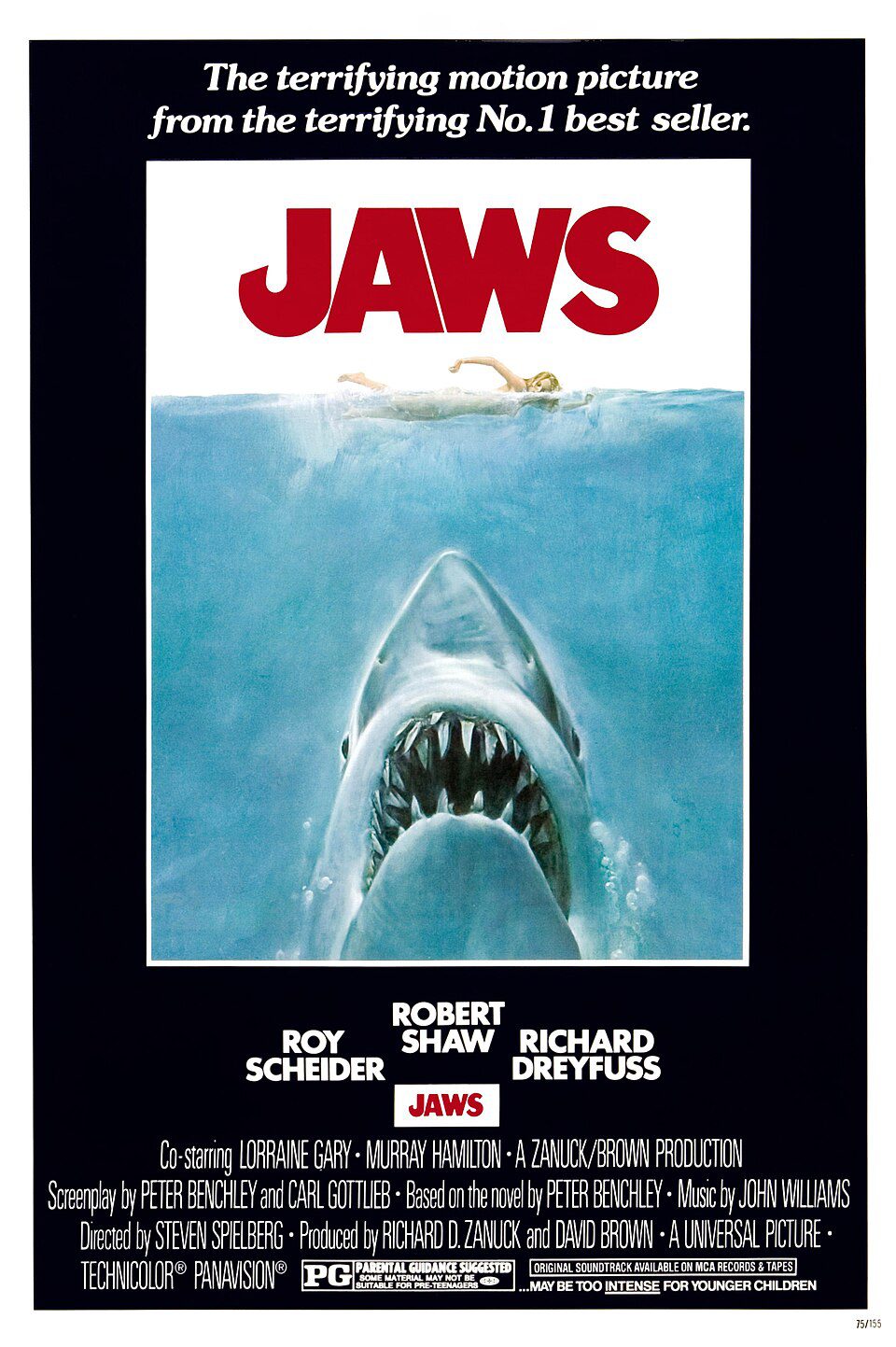
“Jaws” swam into theaters 50 years ago and changed cinema forever. The film not only created the “summer blockbuster,” but also became a cultural phenomenon. Inspiring a lasting fear of sharks and the ocean, “Jaws” is just as relevant today.
The movie almost didn’t come to fruition, but against the odds it became an all-time classic for director Steven Spielberg. The unreliable mechanical shark, choppy ocean waters, constant rewrites and behind-the-scenes conflicts all contributed to one of the most chaotic film shoots in history. With so much stacked against it, many call it a “miracle” that the movie got made at all. That only makes its success more iconic.
Over the first 45 minutes of “Jaws,” there aren’t any real “jaws” to be seen. Instead, the horror is suggested: the aftermath of attacks, the splashing of frantic swimmers and the idea of what lurks beneath. By refusing to show its monster outright, the film builds a steady sense of dread.
This technique turns the fear into something bigger than a creature feature. It becomes a town-wide paranoia. We see a community fraying at the seams, with tensions between Chief Brody and Mayor Vaughn underscoring the dangers of denial and profit-driven decisions.
As Mayor Vaughn memorably puts it, “You yell barracuda, everybody says, ‘Huh? What?’ You yell shark, we’ve got a panic on our hands on the Fourth of July.”
That paranoia becomes reality in the final act, when Bruce the Shark finally surfaces. Spielberg’s film cleverly blends real shark footage with the massive, malfunction-prone mechanical beast. Despite constant breakdowns on set, the effect on screen is nothing short of breathtaking.
Bruce is monstrous and unpredictable. The movie knows exactly when to deploy him, balancing terrifying attacks with moments of sheer awe. The fact that the shark works as well as it does is a triumph, considering how often it didn’t. Spielberg leaned into timing and editing to make the beast scarier than any visual effect ever could have.
Of course, no conversation about “Jaws” is complete without mentioning its legendary score. John Williams crafted one of the most iconic themes in movie history, with his pulsing “duh-duh, duh-duh” instantly recognizable around the world. Even outside the theater, a few notes can trigger the same primal panic.
Spielberg’s direction is equally essential to the film’s staying power. “Jaws” takes full advantage of its ocean setting, with both sweeping beach vistas and claustrophobic boat scenes. The editing, pacing and combination of sound and image elevate what could have been a messy B-movie into high art.
Performances from Roy Scheider (Martin Brody), Richard Dreyfuss (Matt Hooper) and Robert Shaw (Quint) elevate “Jaws” even further. The chemistry of these three characters makes the human story just as gripping as the shark attacks.
They don’t make movies like “Jaws” anymore. Few films can terrify an entire generation while also delivering a sense of wonder and adventure. “Jaws” is that rare mix — a survival thriller, monster movie, drama and an adventure story all in one.
It scared people out of the water, but also gave them a reason to head back to the theater again and again. Even today, this stands true. Fifty years later, the water still feels just a little less safe.
