
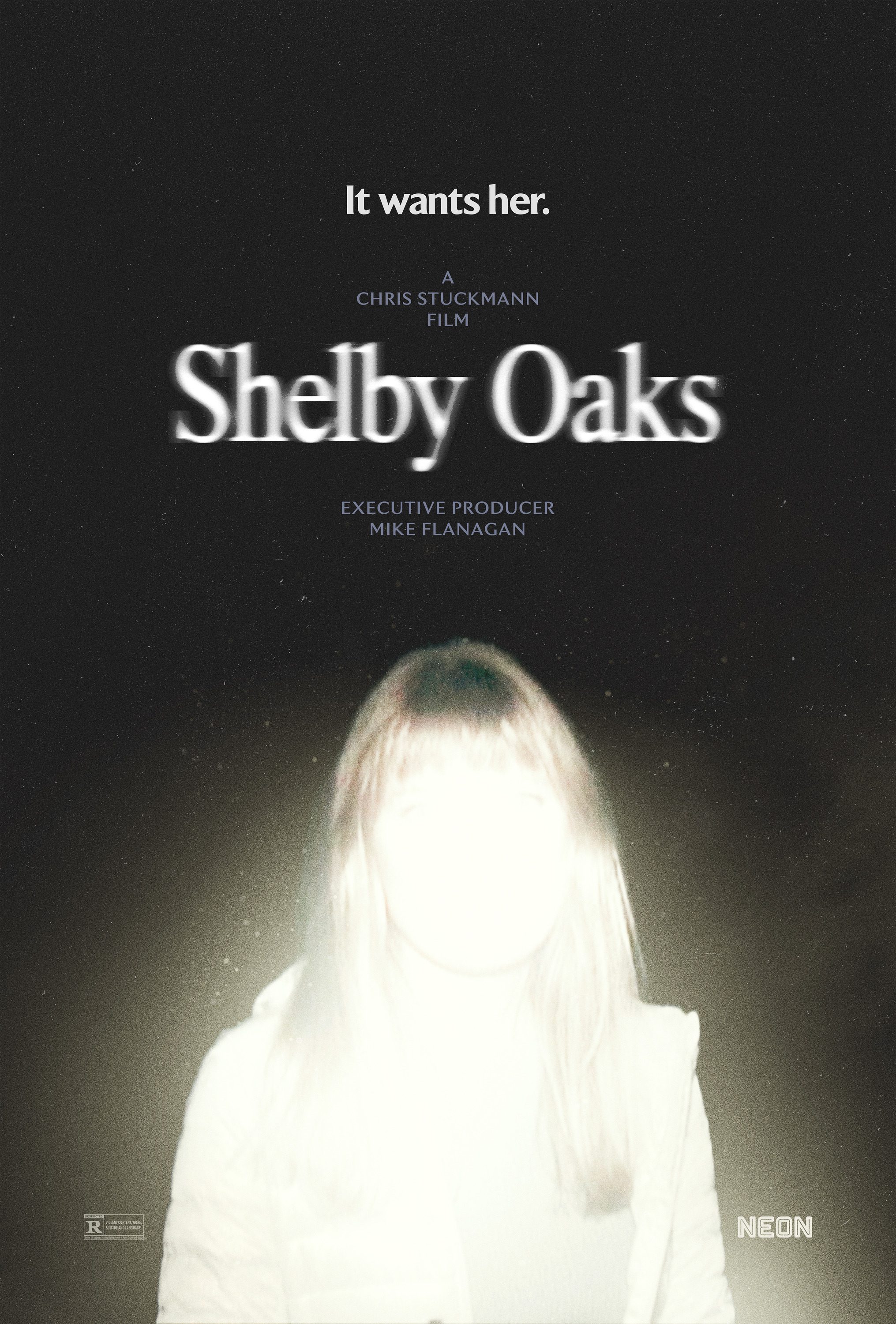
Words can’t fully describe just how much I wanted to love “Shelby Oaks.” Having been a longtime follower of Chris Stuckmann, his directorial debut was a highly anticipated one for me. As a source of inspiration for many reviewers (myself included) and aspiring filmmakers, that makes this an interesting movie to dissect on a personal level.
And, “Shelby Oaks” is… good.
A Bold and Emotional Beginning
The film opens in bold fashion, executing a mockumentary-style approach for nearly 20 minutes before the opening credits. These early moments are bound to frustrate audiences expecting a mainstream experience from start to finish. “Shelby Oaks” executes this approach to near perfection, providing easily digestible lore. At the same time, the early segment also sets the groundwork for the emotional stakes it leans on time and time again.
While “Shelby Oaks” delivers scares, it often takes an emotion-heavy approach. With Mia (Camille Sullivan) at the forefront, the film examines the grief and trauma caused by the disappearance of her sister. This obsessive desire for answers lingers throughout the entire movie – with the all-consuming sorrow at times being more compelling than the culmination itself.
Sullivan’s performance plays a large part in the movie’s success. She is constantly shifting emotions in the blink of an eye, ranging from depressed to composed to shocked to fearful. And she does so with ease, with “Shelby Oaks” relying on her to perform at a high level over and over again. She does just that.
Craft, Commitment and Cinematography
In his directorial debut, Stuckmann showcases his vision. “Shelby Oaks” is undoubtedly beautiful. The intermixing of handheld and stabilized footage works in its favor, quickly changing from calm to scary in a moment’s notice. Despite much of the film taking place in the dark, various lighting techniques are utilized to add beauty to what could have been bland shots.
The editing of “Shelby Oaks” is to be admired as well. With its many different styles, it maintains a consistent tone that allows the 91-minute runtime to fly by.
Scares are apparent in “Shelby Oaks,” though there is potential for horror fanatics to be disappointed. The film is subtle with its frights, often finding more success with jump scares than genuine dread. That doesn’t mean the jump scares are unearned, however. The sound design plays a big role in many of the movie’s most effective moments. Sharp noises mixed with snappy onscreen cuts create scenes that will have viewers jolting. All of these elements combine to form an unsettling atmosphere.
There is a sense of repetitiveness inside “Shelby Oaks.” The scares never reach ultimate horror heights, and they often feel like something that’s been done before.
Uneven Execution, But a Clear Voice
“Shelby Oaks” isn’t trying to be your average scary movie. The film’s ultimate goal is to make the audience think. This will be lost on many who expected something different, but Stuckmann’s commitment to giving the familiar a sense of unfamiliarity is refreshing.
Still, “Shelby Oaks” falls into an array of horror clichés that ultimately don’t allow it to stand out from the pack. Specifically in the final act, the movie chooses a more traditional horror route, resulting in a by-the-numbers experience.
As the movie gradually loses steam, it’s hard not to feel a sense of frustration. “Shelby Oaks” is unique… until it’s not. This doesn’t make it bad, but it does leave you wishing for just a little bit more.
“Shelby Oaks” isn’t the must-see movie of the year. It’s still good, however… and that’s perfectly OK. It’s a promising directorial debut from Stuckmann, with his passion shining through every frame. Where is Riley Brennan? The answer may not shock, but it’s still worth finding out on the big screen.
Rating: 3 out of 5
