
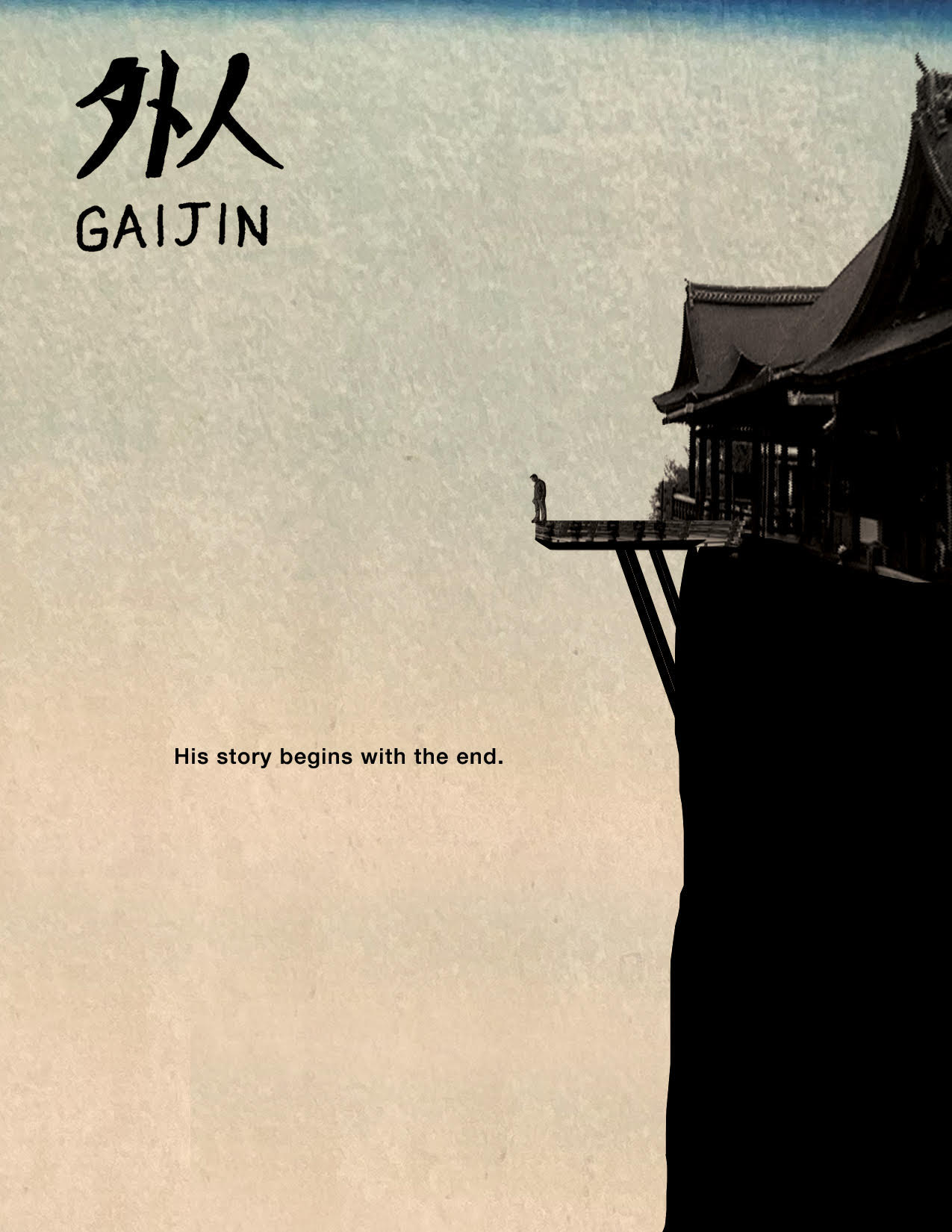
“Gaijin” follows an American grad student who travels to a legendary temple in Japan to kill himself, only to have his suicide attempt interrupted by the spirit of his dead twin brother.
The film wastes no time in executing on the promise of its premise — with core themes of grief and mental health being established in the opening minutes alone. From there, “Gaijin” goes in a number of different directions.
While the heavy subject matter is what resonates, hope is actually what comes from “Gaijin.” Tragedy strikes in life, but it’s typically positivity that hides behind every corner… you just have to look for it. Through the protagonist’s journey, the film shows the audience how extraordinary an ordinary life can be with a positive mindset.
“Why not wait till Cherry Blossom season?”
“Gaijin” is similar to 2025’s “Rental Family.” While different in many ways, both movies linger on the importance of connection.
“No matter what you’ve been through, no matter what you’ve done or how far you’ve run to escape the pain in your life, there’s nowhere you can go where hope cannot follow,” said director Mark Chamberlain.
Mark and his twin brother Michael Chamberlain co-wrote the film. Both star in “Gaijin” as well, with Michael in the lead role as Lewis and Mark playing his deceased twin, Ezekiel.
Michael succeeds at bringing emotion to the screen. With darkness surrounding his character at every turn, Chamberlain is forced to constantly change his delivery. It comes across as realistic, feeling like a person attempting to maintain a normal life while dealing with hidden traumas and emotions. With minimal screen time, Mark interjects layers of comedy to alleviate heavy moments.
Rounding out the ensemble cast are Yuki Iwabuchi (Aya), Sidyne Mavodza (Sidyne), Richard Curtis (David) and David Marroquin (Tito).
On a technical level, “Gaijin” has noticeable issues. The sound design is fractured at times, with vocal levels rising and lowering inconsistently. This distracts in the middle of conversations, as one line is loud while the next is almost like a whisper. Natural elements like wind or general background noise can sometimes overtake the dialogue as well. The editing often suffers from the same effect. Jarring transitions can interrupt key moments, either not aligning with the visuals or creating a “choppy” overall flow.
Directors of photography Patrick Ruth, Mark Chamberlain and David Marroquin bring authenticity in the camerawork, however. It’s a street-level, gritty experience that is full of handheld footage. This puts the audience directly in the central character’s shoes as he navigates the abundance of feelings that come after loss.
On top of this, the shooting style also emphasizes the beauty of the world surrounding Lewis. Filming in places like Japan, New England and Zimbabwe, everything about “Gaijin” comes across as “real.” It’s a true indie production — never looking polished or glamorous.
Despite the technical caveats, “Gaijin” has tremendous amounts of passion behind it. It’s a blending of cultures, beliefs and ideas, culminating in a story that is hard not to get behind.
“Gaijin” will likely prove to be too taxing, too coarse for general audiences. Look past its flaws, however, and there’s a powerful story within.
Rating: 3 out of 5
