
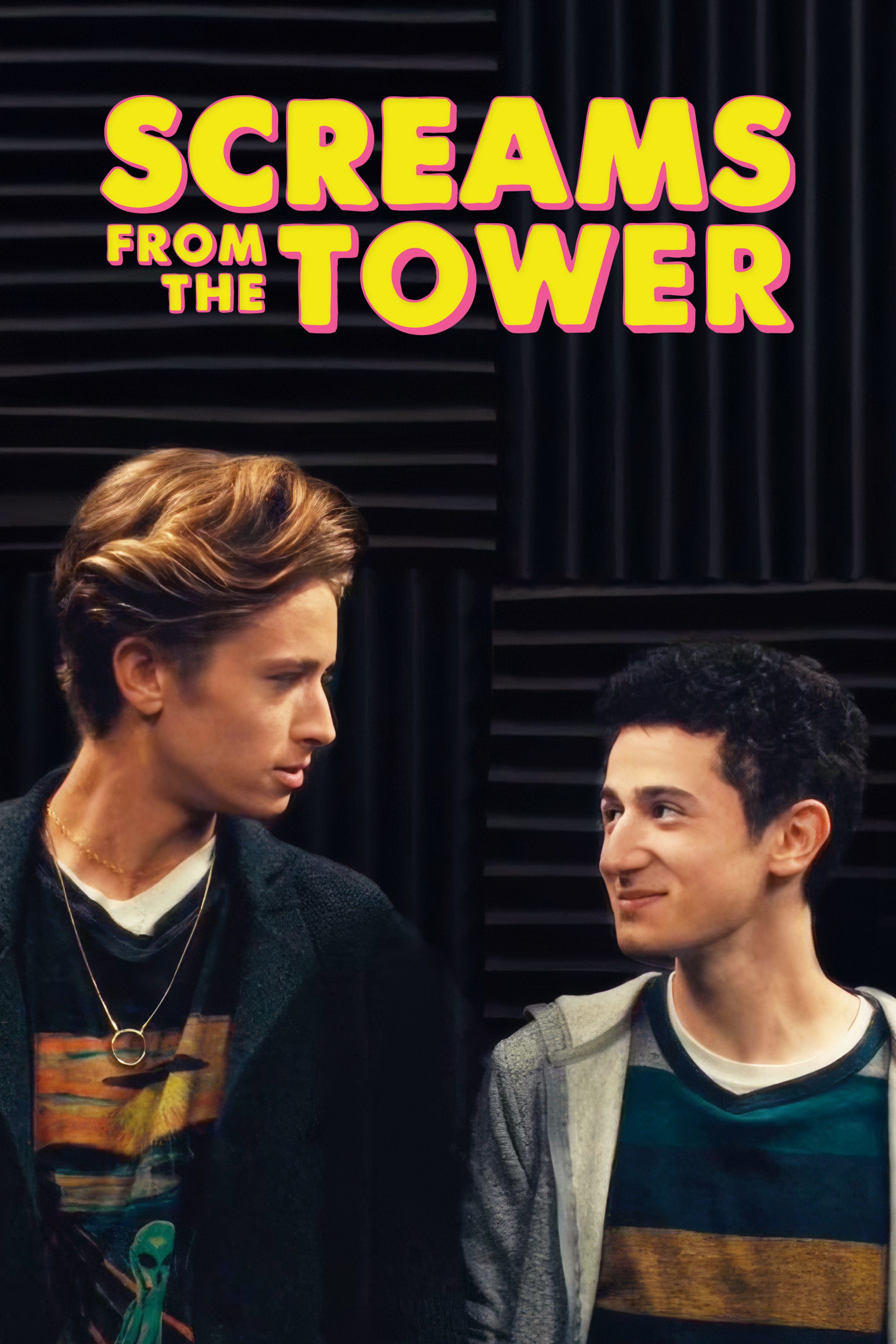
“Screams From the Tower” follows best friends Julien and Cary, who face popularity and infamy they never imagined while having their own show on the high school radio station.
The first half of “Screams From the Tower” feels like sunshine and rainbows. The characters see their dreams come true, the music is constantly upbeat and the editing is fast-paced. At the midway point, however, there is a drastic shift. From then on, the film actually has something more to say.
It’s a true coming-of-age story, exploring the ups and downs of growing up. While in high school, kids are still trying to figure out their own identities, beliefs and passions. Along the way, new friendships blossom and old ones fade (or change). That’s the beauty of life — and it’s the beauty of “Screams From the Tower.”
The film captures this feeling perfectly. One day, it seems like you have your entire life figured out. The next, it’s like the world is collapsing. It’s a similar experience to classics like “The Breakfast Club” or “Dazed and Confused,” alongside newer releases like “All Is Fine in ‘89.”
At its heart, “Screams From the Tower” is a queer film. It shows the journey of characters who are confident in who they are and others who are still unsure. It’s a movie that the LGBTQIA+ community can easily relate to, but also people of any sexuality.
“So many coming-of-age films, particularly queer films, have focused on drugs, sex, parties, parental persecution, religious bigotry, unrequited high school crushes, etc.,” said writer-director Wexler Grant. “I’d like to think ‘Screams From the Tower’ falls sweetly into a new crop of queer films and television shows that anyone can relate to regardless of one’s identity.”
Richie Fusco (Julien) is in the spotlight, delivering a multilayered performance. While Julien has an extremely charismatic personality, Fusco also lets out deep emotion in key moments. Unfortunately, the character isn’t always likeable. This makes it challenging for the audience to buy into his journey at times, despite being the “protagonist.” Still, this is partly by design. “Screams From the Tower” isn’t afraid to display both the “good” and “bad” of all its onscreen individuals. While this hinders the movie at times, it also makes it more inherently real. Fusco sells all the different sides of this complex persona in impressive ways.
Other memorable additions to the ensemble cast are David Bloom (Cary), Madison Tevlin (Suzy), Melody Betts (April) and Sydney Lolita Cusic (Sam). Bloom’s presence is the most notable among the supporting actors, with his character’s individual journey being prominent alongside Julien’s.
Attempting to balance complex themes with high school comedy, “Screams From the Tower” sometimes faces tonal confusion. The movie is very certain in its own identity, however. Grant’s clear vision as director helps to smooth over some of the more jarring transitions.
“Screams From the Tower” is too long. At 118 minutes, there is a lot of information packed inside. Yet, by the time the credits begin to roll, certain aspects still feel underdeveloped. The central friendship between Julien and Cary, specifically, grows more distant throughout the course of the movie. However, it remains core to the film’s conclusion. There are missing pieces that would have helped this aspect of the story resonate more fully.
Certain segments of the film also move more slowly than others, but it always remains entertaining because of the distinct style that is present.
“Screams From the Tower” is “weird” in all the right ways. It’s a coming-of-age story for the LGBTQIA+ community — but everyone is welcome. People from all walks of life can resonate with the themes within.
Rating: 3.5 out of 5
