
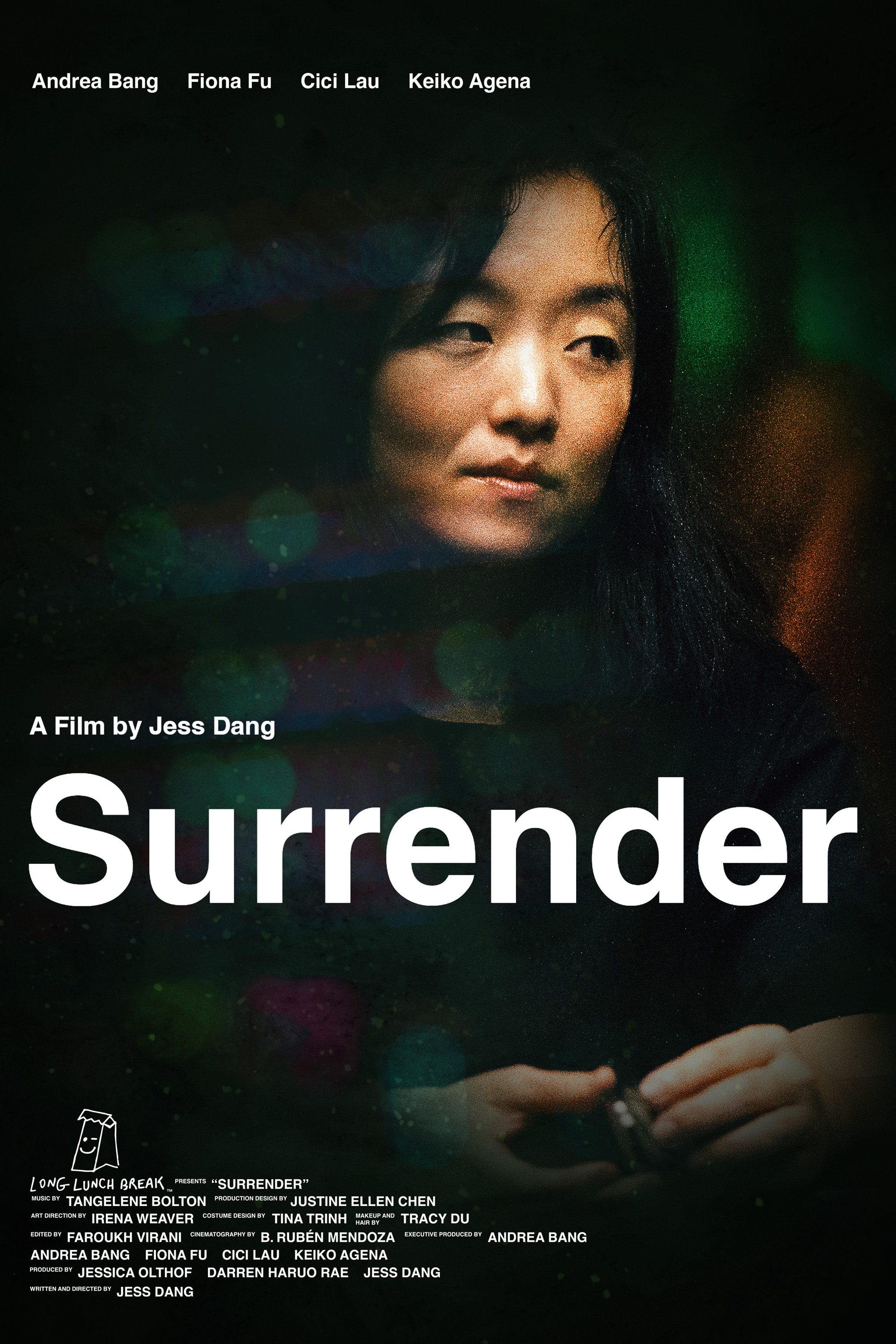
“Surrender” follows Naomi, a young Asian American woman who finds herself addicted to gambling after falling into the world of blackjack.
Addiction is key to “Surrender.” Rather than immediately providing backstory on the central character, writer-director Jess Dang emphasizes Naomi’s behavior. She spends time at the casino during work hours. She scratches off lottery tickets in secret. She forgets about basic tasks because her mind is so preoccupied with the “thrill” of possibly winning money. All of these tiny actions culminate in a clear pattern of dependency, which Dang is able to convey extremely quickly.
Alongside Naomi’s individual actions, the film provides snapshots of normalcy with friends and family. This not only includes present-day moments, but also memories and flashbacks. Throughout the course of the 95-minute runtime, glimpses of her childhood are shown — environmental factors and generational trauma that played a role in leading her to where she is today. These sequences give viewers much-needed contrast, following a then-and-now format that is clearly a cycle of pain.
It’s in this way that “Surrender” acts as a character study. Dang isn’t attempting to shame Naomi, instead examining her struggles from a neutral perspective. It’s ultimately up to the audience to judge (or sympathize) with her. Because of this, the movie is much more nuanced than simply “gambling is bad.” Dang highlights the unseen issues of addiction while reflecting on her own life in the process.
“At the heart of the film is a question: What generational stories do we inherit, and which ones do we choose to rewrite?” Dang said. “My hope is that ‘Surrender’ creates space for empathy and more honest conversations about the experiences we too often keep hidden.”
It’s a similar approach to that of other 2026 indie releases, “To Love a Narcissist” and “$POSITIONS.” All three films examine compulsive behaviors and how they affect a person alongside those surrounding them, with “Surrender” being a grounded take on just how much a dollar sign can cause people to spiral.
Director of photography B. Rubén Mendoza isn’t overly flashy with the camerawork. “Surrender” features largely muted visuals, which underscore the bleakness of Naomi’s life outside of the bright casino lights. Mendoza does a number of things to accentuate the character’s feelings, like keeping entire shots blurred or using shaky handheld footage to match her fractured mental state. Faroukh Virani’s editing and Tangelene Bolton’s score are like this as well. The film is purposefully slower-paced to start before upping the tempo in the final act. The music is equally tame at the beginning, gradually becoming more present as the financial desperation grows.

Andrea Bang (Naomi) stars in “Surrender.” While not exactly a “dual performance,” Bang does have a sort of two-faced role. With others, she portrays a friendly personality that makes it seem like nothing is wrong. When alone, however, she carries a quiet, broken presence. There are a number of scenes where Bang is required to heighten her delivery, but she never overreaches. Naomi feels like a real person because Bang grounds the character in reality. Also appearing are Fiona Fu (June), Cici Lau (Gran Mi) and Nozipho Mclean (Jovie).
The film is sometimes too grounded for its own good. While “$POSITIONS” had a modern cryptocurrency edge, this feels very familiar. By keeping the story so personal, “Surrender” doesn’t contain a unique plot point that makes it inherently unique. But that’s also part of its singularity. Many people watching the movie may know someone like Naomi — or it could even be themselves. As simple as the narrative may be, it remains relatable.
“Surrender” illustrates how addictions like gambling can be hidden in plain sight. Rather than delivering opinions or even resolutions, it almost serves as a mirror for those in need.
Rating: 4 out of 5
