
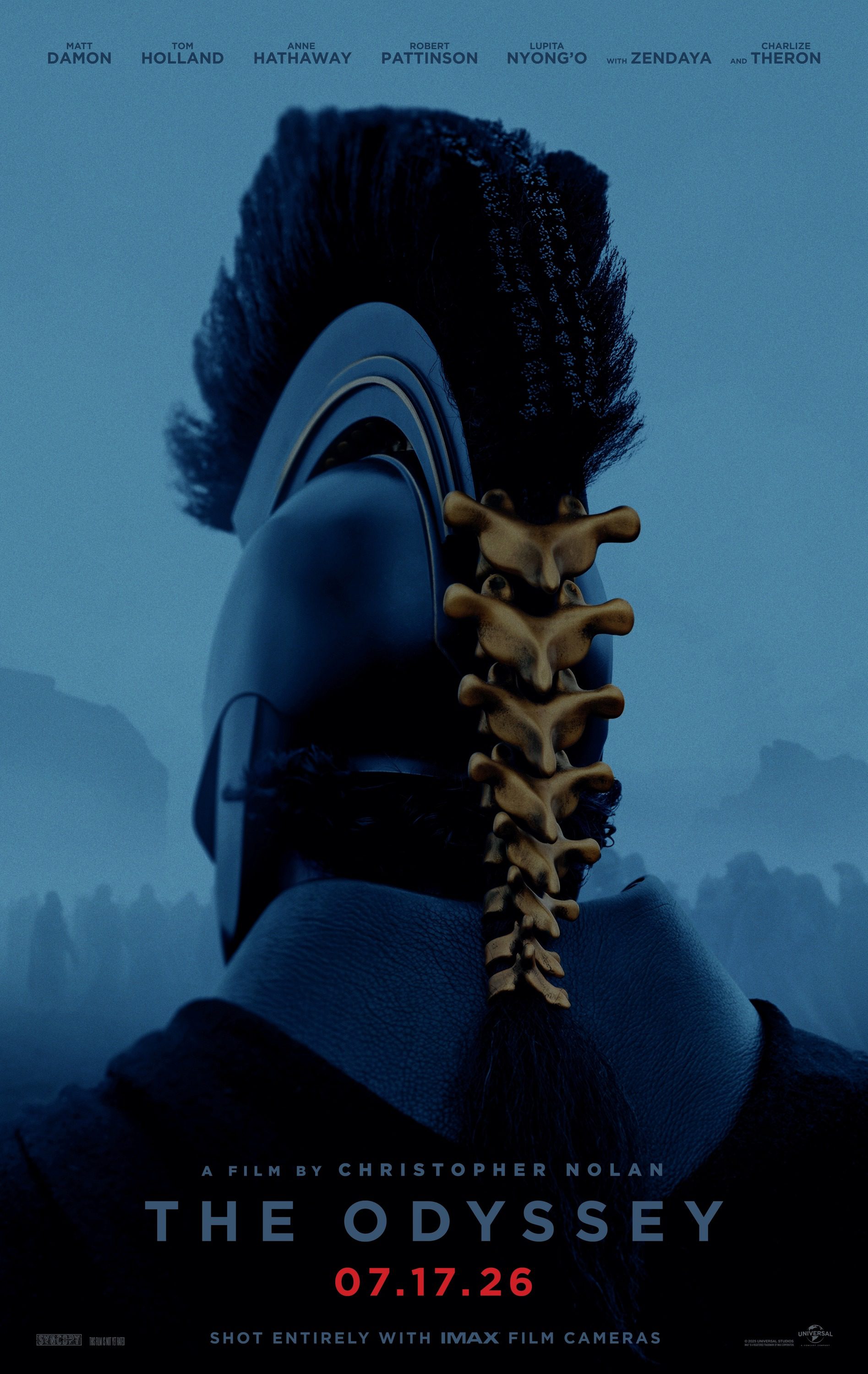
Christopher Nolan’s first feature film, “Following,” was released in 1998 with a $6,000 budget. Twenty-eight years later, he has a $250 million budget with “The Odyssey.” Whether it’s an all-time classic or an average thriller, there’s not a single “bad” movie in his filmography.
With the release of “The Odyssey,” it’s the perfect time to revisit all 13 of his directed films.
13. ‘Insomnia’
“Insomnia” is the least “Nolan-like” piece in Christopher Nolan’s filmography. While he did write the final draft of the remake, this is the only feature of his career where he doesn’t have an official screenwriting credit (leaving it to Hillary Seitz), and it shows.
Not overly intricate, “Insomnia” feels like a standard crime thriller. This isn’t necessarily a bad thing, but it does make it an anomaly compared to his other works.
Still, the performances from Robin Williams (Walter Finch), Al Pacino (Will Dormer) and Hilary Swank (Ellie Burr) are great. It’s a straightforward movie amid many all-time classics on this list.
12. ‘Following’
Nolan’s first feature film has darker energy to it. Literally, because it was shot on 16mm black-and-white film stock, but also because of the inherent creepiness that comes from the premise.
If you’re a fan of independent cinema, this is just that — only running 69 minutes long and made on a budget of approximately $6,000.
It’s a classic game of cat and mouse that is elevated by its nonchronological format, albeit with a slightly predictable conclusion. This becomes especially true as characters pause to explain the twist rather than letting it play out.
“Following” contains all of Nolan’s best traits, just at a much smaller scale. Technical flaws aside, it’s a consistently entertaining piece of low-budget filmmaking
11. ‘Batman Begins’
“Batman Begins” is the introduction to Christian Bale’s Bruce Wayne (a.k.a. Batman). He’s the perfect casting choice for the more grounded approach to the character, deeply traumatized but also arrogant. Bale conveys the different facets of Bruce well, while also being a physical force as Batman.
The supporting cast is also memorable, featuring Liam Neeson, Michael Caine, Morgan Freeman, Gary Oldman and Cillian Murphy.
Here, however, the introduction lasts far too long. Slowly dissecting Bruce, Nolan doesn’t provide the audience with enough of what they came to see, which is the Caped Crusader. And when the action does happen, it’s easily the least convincing of the trilogy.
10. ‘The Dark Knight Rises’
The scale may be much larger, but “The Dark Knight Rises” doesn’t completely stick the landing. This is mostly because of the conveniences and logic gaps that propel the narrative forward.
Even with its flaws, the film features yet another iconic villain in Tom Hardy’s Bane. You can’t always understand him, but I would argue that has made the character even more iconic. Hardy is physically imposing and poses a serious threat for a trilogy closer; it’s just too bad that he wasn’t acting alone. You also get the addition of Anne Hathaway as Catwoman.
For the Dark Knight himself, this proves to be a fitting conclusion.
9. ‘The Prestige’
“The Prestige” is like a magic trick in itself, with genuine surprises throughout the 130-minute runtime. On the surface, the twists seem almost too exaggerated, but Nolan builds toward them with clues along the way.
On top of the script is the all-star cast of Bale (Alfred Borden), Hugh Jackman (Robert Angier) and Scarlett Johansson (Olivia Wenscombe).
The biggest problem comes from the insufferable lead characters. Ruining the lives of almost everyone around them, this makes it almost impossible to buy into their stories. This is especially apparent on rewatch.
Nonetheless, “The Prestige” is another bold blending of genres that succeeds more than it doesn’t. Many even consider it to be one of Nolan’s best.
8. ‘Dunkirk’
“Dunkirk” is a challenging film to rank. It’s exceptionally crafted, but never feels as quintessential as his other work.
The film is beautifully edited, with converging “land,” “air” and “sea” storylines that blend together at the end. This is another example of Nolan focusing on spectacle rather than characters, choosing not to provide the audience with an emotional throughline. It’s a portrayal of World War II without the glamorization that often comes along with it.
While the technical approach points to Nolan, “Dunkirk” is definitely a departure from some of his other work. Still, if you can get past this, there is a riveting and intense story inside.
7. ‘The Dark Knight’
It’s called “The Dark Knight Trilogy” for a reason.
“The Dark Knight” is remembered for Heath Ledger’s performance as the Joker, deservedly so. He fully transforms into the villain, taking creative liberties to bring a distinct identity to the screen. It’s not often that you can watch a movie and see actual fear on co-stars’ faces. Ledger brought that energy here.
On top of this is the added layer of tragedy that the film possesses, both through Harvey Dent’s transformation and the moral dilemmas that are constantly presented.
“The Dark Knight” moves past the setup of Bruce Wayne, meaning it’s all about Batman — and the Joker, of course.
6. ‘Memento’
“Memento” is a masterful examination of time. Using concurrent forward and backward timelines, it gives the audience the same sense of memory loss that Guy Pearce’s Leonard Shelby experiences.
Similar to “Tenet,” this is a much more accessible (and grounded) exploration of the concept. Here, the lack of large-scale set pieces or sci-fi spectacle allows it to focus on psychological tension.
In terms of revenge movies, it’s undoubtedly one of the most original. For only his second feature film, Nolan provided a clear indicator of his future successes.
5. ‘The Odyssey‘
After only seeing a film once, it’s hard to put a definitive number to it, but… “The Odyssey” is easily one of Nolan’s top five movies.
Many have labeled Homer’s nearly 2,800-year-old literature as “unadaptable.” I, for one, was even skeptical to see how the complex structure would be brought to the big screen. As he has before, though, Nolan implements a nonchronological narrative that gradually races toward an impactful finale.
“The Odyssey” has a little bit of something for everyone: large-scale action, mythological fantasies and even some horror. It’s a mixture of so many ideas that manages to deliver timely messages about the cost of victory and basic right-versus-wrong moralities.
It also features his largest ensemble cast to date, including Matt Damon (Odysseus), Tom Holland (Telemachus), Anne Hathaway (Penelope), Robert Pattinson (Antinous), Himesh Patel (Eurylochus), John Leguizamo (Eumaeus), Zendaya (Athena), Charlize Theron (Calypso), Lupita Nyong’o (Helen of Troy/Clytemnestra), Samantha Morton (Circe) and many more.
Epic in every sense of the imagination, only time will tell if “The Odyssey” climbs even higher on this list.
4. ‘Inception’
“Inception” is as fresh as it comes in the sci-fi genre. There’s certainly convolution within a story about manipulating individuals’ subconscious minds inside their dreams, but it’s wholly original.
When thinking of Nolan, “Inception” is oftentimes the first movie that comes to mind, because it was my favorite film of his for so long. Over time, it’s moved ever so slightly down the ranking — but only because Nolan has continuously improved over his directing career.
Leonardo DiCaprio (Cobb) delivers an emotional performance, which is much-needed to ground the exposition-heavy, concept-riddled nature of “Inception.”
Outside of “Oppenheimer,” this is easily Nolan’s best “needledrop” ending. The ambiguity still has people talking about it today (I think Cobb was dreaming).
3. ‘Oppenheimer’
“Oppenheimer” is Nolan’s most polished film, even with a 180-minute runtime. Jennifer Lame’s editing is fast-paced, keeping the constantly moving pieces within grasp.
While his commitment to practicality does hinder the Trinity Test scene, Nolan manages to capture the force behind it through close-ups and sound. More importantly, though, he nails the lasting impact. Themes of overwhelming guilt and world-changing consequences make it endlessly timely.
Cillian Murphy (J. Robert Oppenheimer), amid a stacked cast, puts forth an iconic performance.
Everyone may have been caught up in “Barbenheimer,” but “Oppenheimer” is clearly the film that will leave an impression. In his first time tackling a biopic, Nolan makes this the definitive story about the man who invented the atomic bomb.
2. ‘Tenet’
“Tenet” was released at a strange time. Many skipped it entirely and others simply disliked it, but this is a movie that shouldn’t be ignored.
All of the emotional beats from “Interstellar” are entirely absent here. The film is purely focused on delivering large-scale, inventive action, and it does just that. As they say, “Don’t try to understand it. Feel it.” That’s the mantra of “Tenet,” and living by that, it’s endlessly rewatchable and entertaining. With every viewing, new pieces of the intricate puzzle that Nolan crafted come to light.
“Tenet” isn’t as polished as the rest of Nolan’s filmography. Nonetheless, it’s his most daring piece of cinema, with several classic scenes coming from within.
1. ‘Interstellar’
“Interstellar” is full of greats: an all-time performance, stunning spectacle and poignant emotion. If there’s one thing that Nolan often struggles with, it’s bringing me to tears. This manages to do that.
Matthew McConaughey (Cooper) is magnetic in the lead role. It doesn’t hurt to have Jessica Chastain (Murphy), Hathaway (Brand), Timothée Chalamet (Tom) and Damon (Mann), either.
While other science-fiction works stumble on theory, “Interstellar” makes the ideas core to its identity. Exploring wormholes and 4D spaces, these then turn into immersive visuals that match the audacity of the concepts themselves.
Even at 169 minutes long, “Interstellar” speeds by. It has everything you can ask for from a sci-fi epic.
