
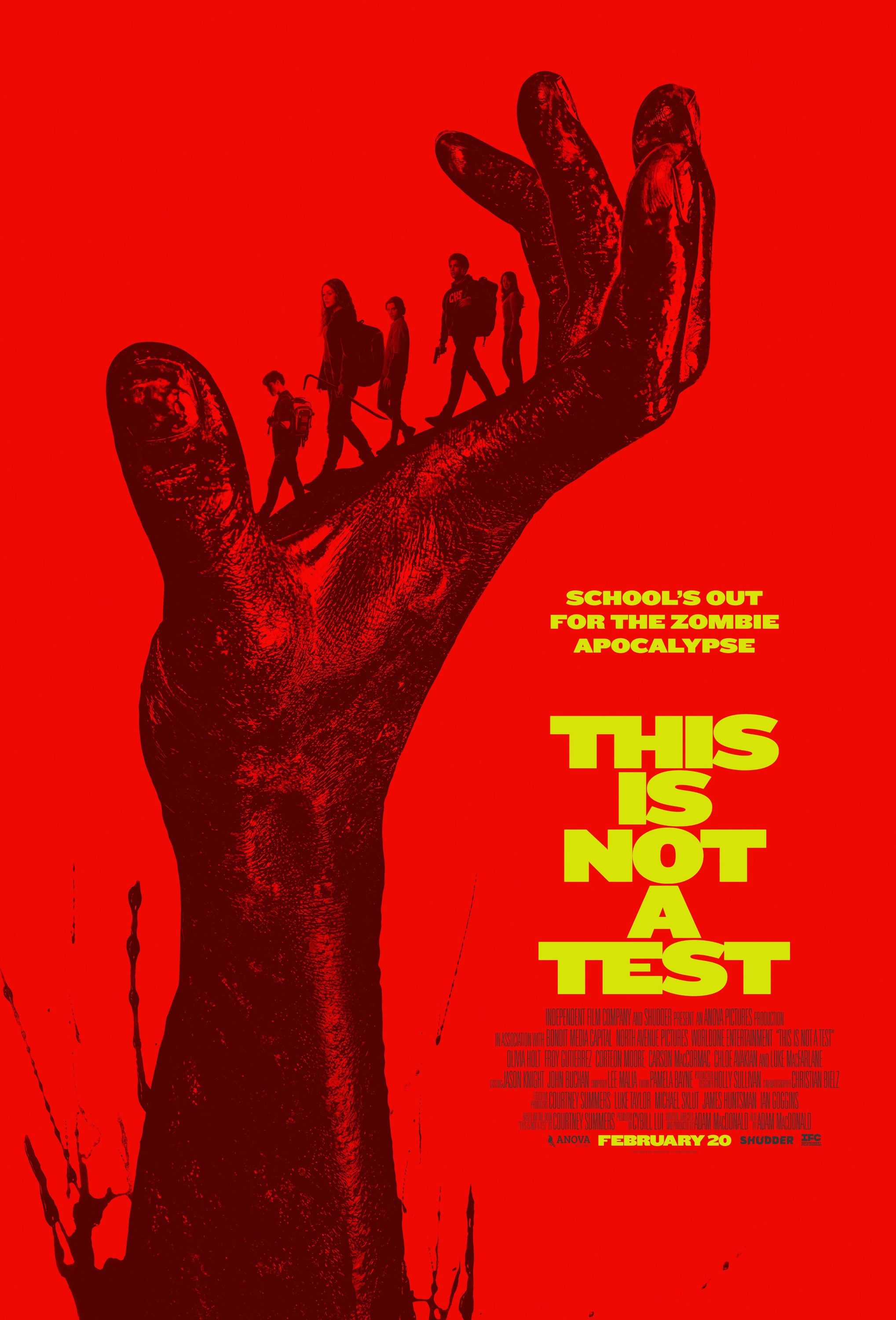
“This Is Not a Test” follows Sloane and a small group of classmates who must take cover in their high school to escape the apocalypse.
In terms of showcasing the start of a zombie apocalypse, “This Is Not a Test” is both subtle and effective. In just under seven minutes before the title card appears, it raises the stakes and builds a world worth investing in. Initially, it keeps the visual focus on the central character, allowing sounds like screams, screeching tires and other chaos to show what’s happening.
Once the camera actually shifts toward the insanity, though, it’s mean-spirited. In the world of “This Is Not a Test,” the zombies aren’t slow. They’re sprinting, jumping through windows and most of all… hungry. This combination of audio and visuals makes the madness even more menacing.
Under the surface of some serious zombie action are some serious themes. “This Is Not a Test” explores mental health, domestic abuse and isolation — all within the context of an apocalypse. Much like this year’s “We Bury the Dead,” this proves to be a more emotional genre spin. And it largely works.
The film does this through a non-linear approach. It utilizes flashbacks throughout, cutting between previous events and the present. Being placed in such a frightening situation allows “This Is Not a Test” to turn Sloane into a multifaceted character. She has her previous traumas, and plenty of current obstacles as well. The differing dynamics create a character that feels authentic and easy for the audience to champion.
If you’re looking for a fresh take on the apocalypse, “This Is Not a Test” has that. Director Adam MacDonald takes a quality over quantity approach with the action. This means it may not be plentiful enough for hardcore zombie fanatics, but the moments themselves are nonetheless effective.
On a technical level, the cinematography, score and sound design complement one another to generate intense moments. Director of photography Christian Bielz brings frantic energy to the camerawork. The shaking and violent movements perfectly mimic the disorderly nature of an apocalypse. Composer Lee Malia also brings a rock-and-roll style to the score, with deep echoes and booming tones that accent the carnage. The entire sound department tops this off, with external noises and alienating sounds playing a major role.
The tension and drama are heightened by the fact that these are teenagers. While horror movies often feature over-the-top logic leaps, poor decision-making actually makes sense here. This does create some of the movie’s biggest problems, however. There is too much teenage drama inside of “This Is Not a Test.” The characters’ immaturity takes away from the film’s deeper emotional themes, which causes several tonal inconsistencies. In fact, many of the early discussions of depression and mental health are pushed aside as the 103-minute runtime progresses. But at the same time, character decisions only grow darker.
In the later stages of “This Is Not a Test,” many of the plot progressions feel rushed. Despite already maybe feeling oversaturated for some horror fans, the film actually would have benefited from adding about 10 more minutes to its runtime. This could have allowed it to further cement the character dynamics before shifting into the final push.
The performances do make it easier to forgive some of the more underdeveloped aspects. Olivia Holt (Sloane) sits at the film’s core, playing a quiet yet layered character. Her performance isn’t overstated, but it delivers quiet emotion and sincerity. Her overall journey is compelling and may feel relatable to many. The other standouts include Corteon Moore (Cary), Froy Gutierrez (Rhys), Chloe Avakian (Grace) and Carson MacCormac (Ben).
“This Is Not a Test” makes the zombie apocalypse thematically relevant. It explores mental health and identity by examining what was and what is — with energetic undead action in between.
Rating: 3.5 out of 5
