
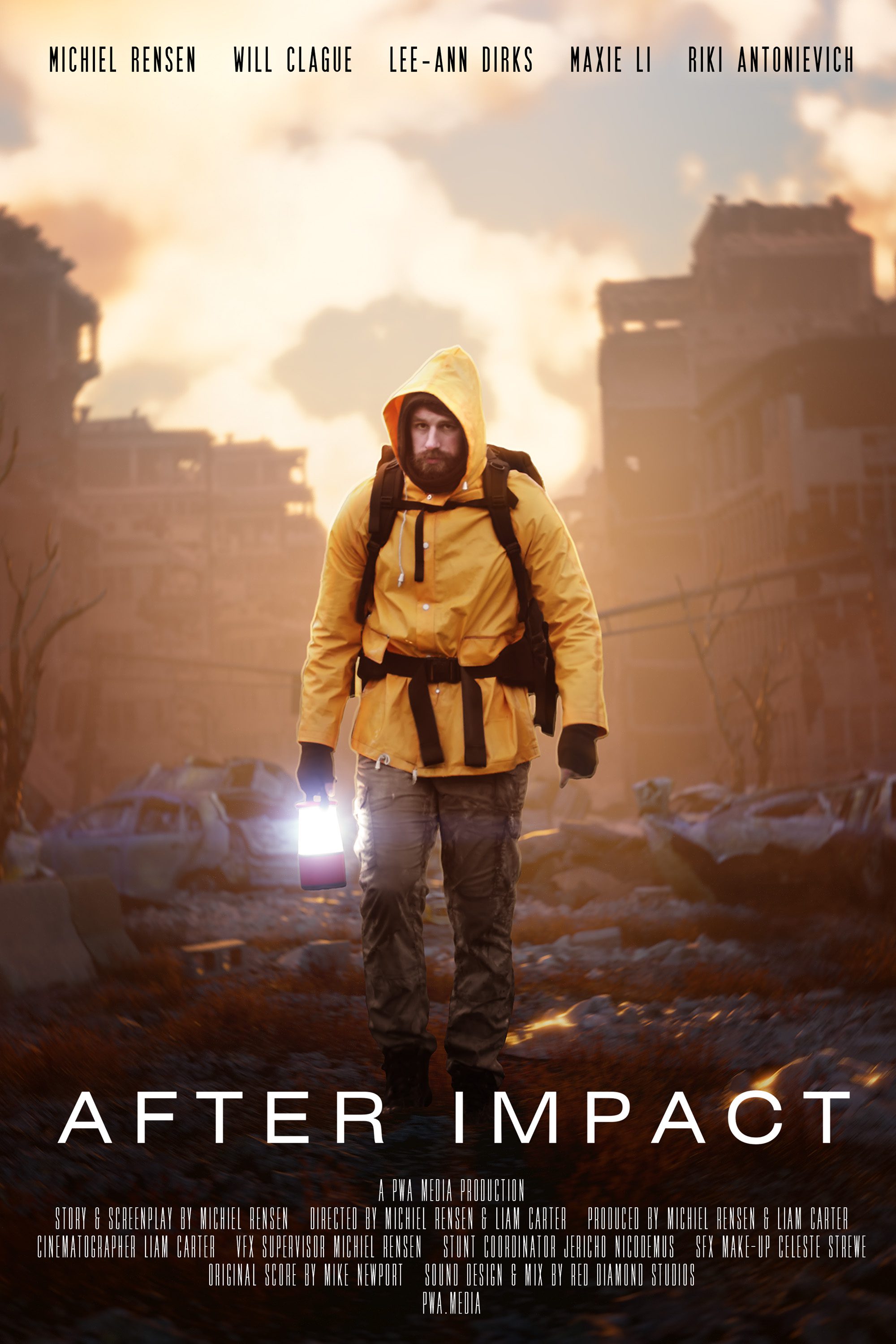
“After Impact” follows Ethan Nichols, who seeks refuge in his family’s bunker as the world faces a devastating threat from an approaching asteroid. While enduring the harsh aftermath of the impact, he discovers that he’s not as alone as he believed.
Rather than opening with a “bang,” directors Michiel Rensen and Liam Carter start “After Impact” with quiet hardships. The loss of a loved one. Unreciprocated feelings. By covering multiple aspects of Ethan’s life over the first 15 minutes, the film has a foundation for the character once the asteroid hits. This works in its favor, because after all, viewers are required to spend a lot of time with him in isolation.
Following the introduction, it takes a sci-fi twist. Much like how “Blackout” features an intimate look at nuclear fallout, “After Impact” has an isolated approach to an apocalyptic natural disaster. Because of this, the 95-minute runtime moves by slowly. Rensen and Carter focus on themes of isolation and existentialism while showing Ethan care for his living space, tend to his wounds and speak over the radio. Rather than being action-packed, this is more of a drama, akin to other genre entries like “Littermates” and “The Assessment.”
This isn’t all the movie has in store, though. It eventually breaks out of these confines, adding in thrills on top of the dramatics. Despite tedious stretches, these brief moments of suspense keep it well-paced. There comes a certain point where “After Impact” extends too far beyond its initial small scale. In attempting to include full-circle character dynamics in the final act, the result comes across as cheesy (and forced) rather than rational. This is a natural progression for the narrative itself, but there’s still a sense of dissatisfaction in terms of predictability. Transitioning from meditative to intense to conventional, the ending doesn’t match the tone of the beginning. In turn, the uniqueness that was once present nearly disappears.
Carter’s cinematography makes the most of the compact corridors. Taking place mostly in an underground bunker, the visuals are often dark. Most of the time, the bleak setting is simply lit by a lantern, also incorporating fire embers for additional ambiance. When moving outside of the claustrophobic location, Carter executes wide shots of snowy mountain terrains or fire-torched landscapes. The visual effects work — which Rensen and Carter also did themselves — adds the final layer of realism. They’re not long-lasting, but aerial shots of completely destroyed cities emphasize that this world truly is dystopian.
Rensen (Ethan) is mild-mannered, often speaking slowly and emotionlessly. While this will likely prohibit some from becoming fully invested in the character, it’s not an unrealistic portrayal. Even when his face is covered by a mask or he is partially obscured by darkness, Rensen successfully sells the stakes. Will Clague (Connor) is practically the opposite, speaking with smugness that makes him a clear “antagonist” of sorts. There’s a sense of intensity in Clague’s delivery that instantly makes Connor captivating, no matter how unlikable he is. Also appearing are Maxie Li (Jessie), Riki Antonievich (Jack) and Lee-Ann Dirks (Sophie).
“After Impact” is a story of personal perseverance — even as the world crumbles around you. While held back by clichés, the film remains grounded by its breathtaking visuals and benevolent messaging.
Rating: 3.5 out of 5
