
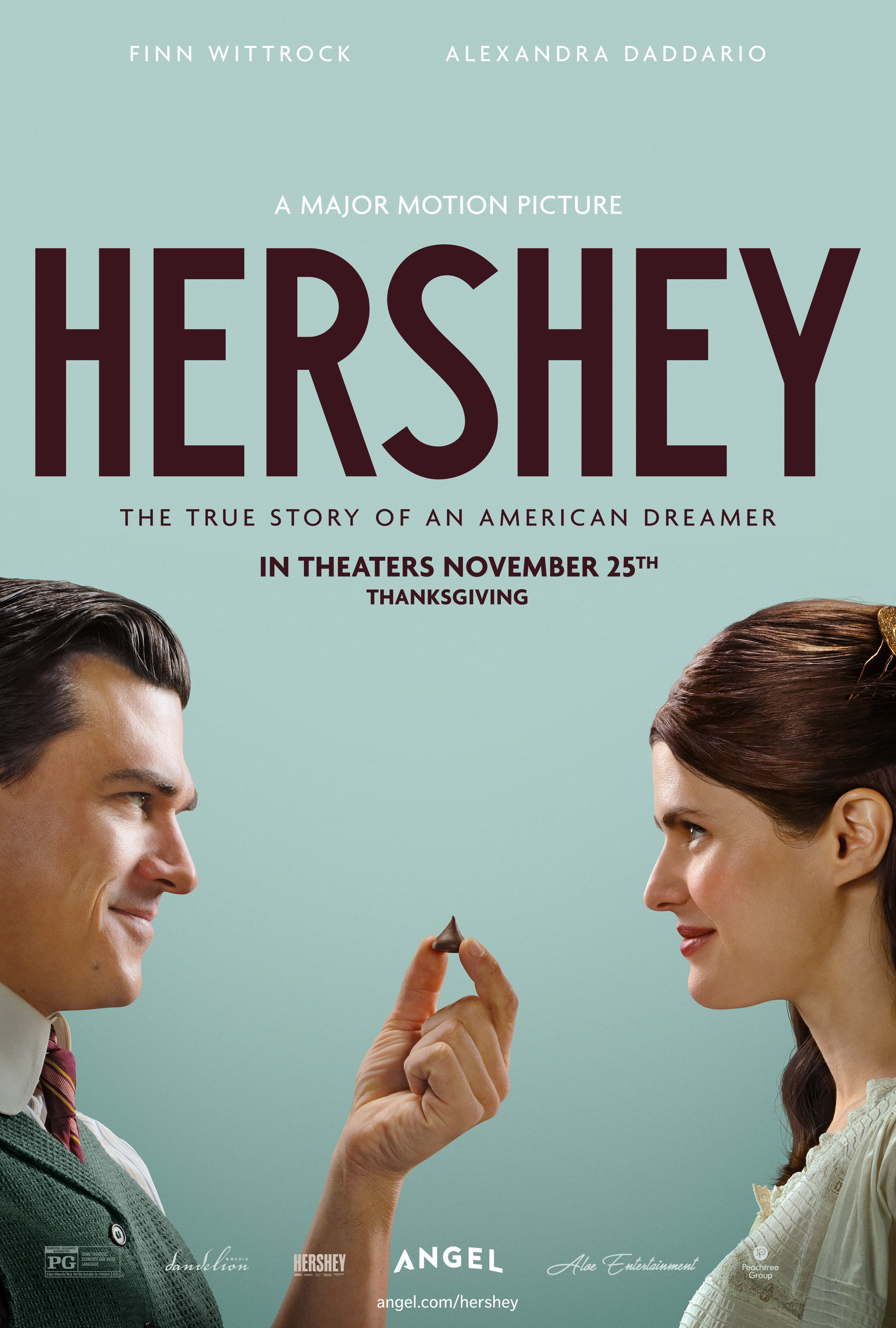
“Hershey” follows the life of Milton Hershey as his determination propels him from bankruptcy to monumental success in the world of candy-making. Together with his wife, Kitty, he builds a legacy sweeter than any candy bar.
Director Mark Waters structures the film as a classic biopic. Roughly the first 15 minutes take place in Milton’s childhood, exploring his early days working as a candy-making apprentice for Joseph Royer. “Hershey” quickly transitions to his adulthood as he navigates a string of attempts to open his own confectionery shop. While the early scenes focus solely on Milton, it doesn’t take long for him to meet the “love of his life.” From here, the story becomes about much more than just the creation of “The Great American Chocolate Bar” — it’s also about the lasting philanthropic efforts that they pursued together.
While similar genre entries typically feature an aha moment, “Hershey” doesn’t. Not for a while, at least. Waters moves through many years very quickly, but maintains a slow-paced approach in terms of the actual narrative. Because of the name alone, many viewers may go into the film expecting a colorful dive into the world of candy akin to “Willy Wonka & the Chocolate Factory.” This isn’t that. In fact, not much time is spent inside chocolate factories at all. It’s a period piece that takes its time revealing the deeper meaning behind the Hershey name.
The first half of the 108-minute runtime maintains a sense of wonder that keeps the story entertaining. The second half becomes overly detailed in its chronicling, going through a checklist of references. This causes the pacing to drag, resulting in an end product that doesn’t feel as magical as it should.
As with any biographical film, there are liberties taken. “Hershey” has a similar approach to another 2026 Angel Studios release: “Young Washington.” If Milton Hershey did anything bad in his life, you’re not seeing it here. He fights for livable wages, loyalty to employees and fair business practices. Because the film was made in collaboration with The Hershey Company and other Hershey organizations, it sometimes comes across as an advertisement. Timothy Michael Hayes and Sharon Paul’s screenplay (based on a story by Bubba Fulcher, Will Hardy, Paul and Waters) plays things safe while also remaining serviceable.
Production designer Neil Patel and costume designer Katie Irish effectively visualize the late 1800s and early 1900s setting. Characters are clothed in period-accurate suits and gowns, some in pristine condition while others are covered in dirt to distinguish the disparity between classes. There are also detailed factories, parlors and other storefronts that add lived-in authenticity. Director of photography Ed Wu aids in this look as well, emphasizing brown hues throughout to almost give the film as a whole a chocolate aesthetic. The characters are highlighted through close-ups, while the outdoor environments are shown in their entirety as shots widen.

Finn Wittrock (Milton Hershey) expresses genuine kindness in his performance. Even if some aspects of Milton are exaggerated, Wittrock makes you believe in his inherent goodness. While James Kelly (Young Milton) doesn’t appear for long, he brings natural curiosity to the screen that helps to immediately flesh Milton out as a character. Alexandra Daddario (Kitty Hershey) adds emotion to the story, with a performance that is both verbal and physical. Her charismatic smile shows Kitty’s natural warmth, while her frightening shakes and increasingly frail movements show the effects of the disease her character is facing.
“Hershey” might effectively be an ad for The Hershey Company, but it’s a feel-good one at least. The quality production makes it easy to travel back in time and experience what Milton and Kitty Hershey built beyond the classic chocolate itself.
Rating: 3 out of 5
