
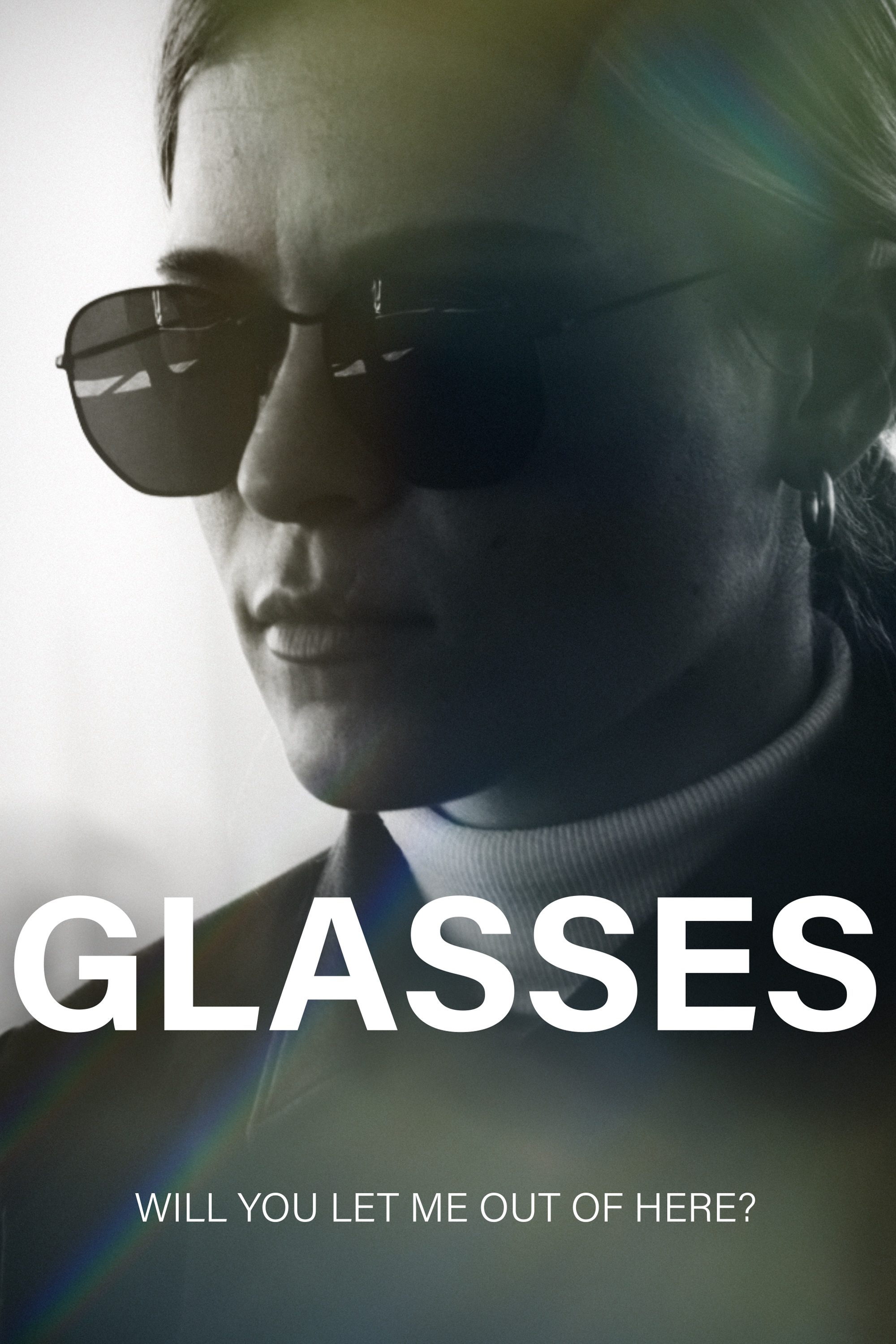
“Glasses” follows a group of strangers who are plunged into a deadly game of survival after being invited to test exciting new technology by a mysterious inventor.
With only an 85-minute runtime, not a second is wasted in “Glasses.” Writer-director Ian Wittenber doesn’t spend time on introductions, beginning with the group already in place and the glasses already unboxed. There are plenty of scientific monologues and plenty of questions asked, with characters’ feelings matching the skeptical energy that viewers probably have as well. At a certain point, however, the exposition becomes overbearing. Every detail that is visualized is also spoken. Whether characters are reading words off a screen or explaining something they see, it ends up feeling like the film is telling rather than showing.
Rather than centering on just one person, “Glasses” is more of an ensemble effort. It’s Joel Kayima (Dean) and Jenni Beatty (Trish) who are right in the middle. Kayima is the suave ringleader, remaining mild-mannered in his delivery even as the stakes rise. He is required to give long-winded lectures that could grow tedious, but he keeps them comprehensive. While the others are constantly logical, Beatty plays a more personable character. She has a subdued personality that gradually becomes more prominent. Also appearing are Makha Mthembu (Laura), Joshua Smith (Sam), Whitney Montgomery (Alice), Jeff Verge (Hunter), Robbie Allen (Russ) and Will Bowles (Frank).
Wittenber purposefully keeps the characters’ intentions ambiguous. This leads to a variety of twists and turns that only work because of the lack of provided information. Eventually, it seems like “Glasses” has an unexpected surprise almost every minute. But what’s real? It’s not entirely clear — by design. As the movie continues to unveil new information, previous reveals become retconned and new turns grow even more shocking.
The characters themselves are the focus of the visuals. The film is largely composed of medium shots, capturing the actors’ movements and the localized environment around them. Instead of remaining completely static, there are subtle shakes that enhance the simplicity. In a story about a “fake” reality, this choice alone sends a clear message about its unstable nature.
Technology is often at the forefront of societal dialogue in 2026. Artificial intelligence. Mass surveillance. Data sharing. These are all “hot topic” issues in the real world; they’re also touched upon in “Glasses.” The concept of virtual worlds has been explored many times before — from “Inception” to “Ready Player One” to “Good Luck, Have Fun, Don’t Die.” Here, it’s about the dangers of unleashing such a simulation.
Unlike those movies, there’s not much traditional action in “Glasses.” The entirety revolves around conversations rather than thrills, deciphering the meaning behind the technology instead of actually exploring it. Many will likely grow frustrated as characters hover around a computer screen or remain inside rather than venturing outdoors. Even when they do move outside, the environment is just as “ordinary” as the real world. This allows Wittenber to avoid large-scale VFX sequences and remain focused on intimacy. Nonetheless, this approach works well for the story that is told. The music helps to alleviate some of this, with heavy beats that make it feel action-packed even when the imagery is static.
There isn’t enough impact in the conclusion. While the global implications of such an advancement are discussed, the film still maintains a personal core. There are clear questions posed, but ultimately no clear solutions.
“You should try it sometime. You just might like it.”
“Glasses” offers discourse on today’s most socially relevant topic: technology. Despite over-relying on exposition, the film grounds its sci-fi story in reality through an inventive premise.
Rating: 3 out of 5
