
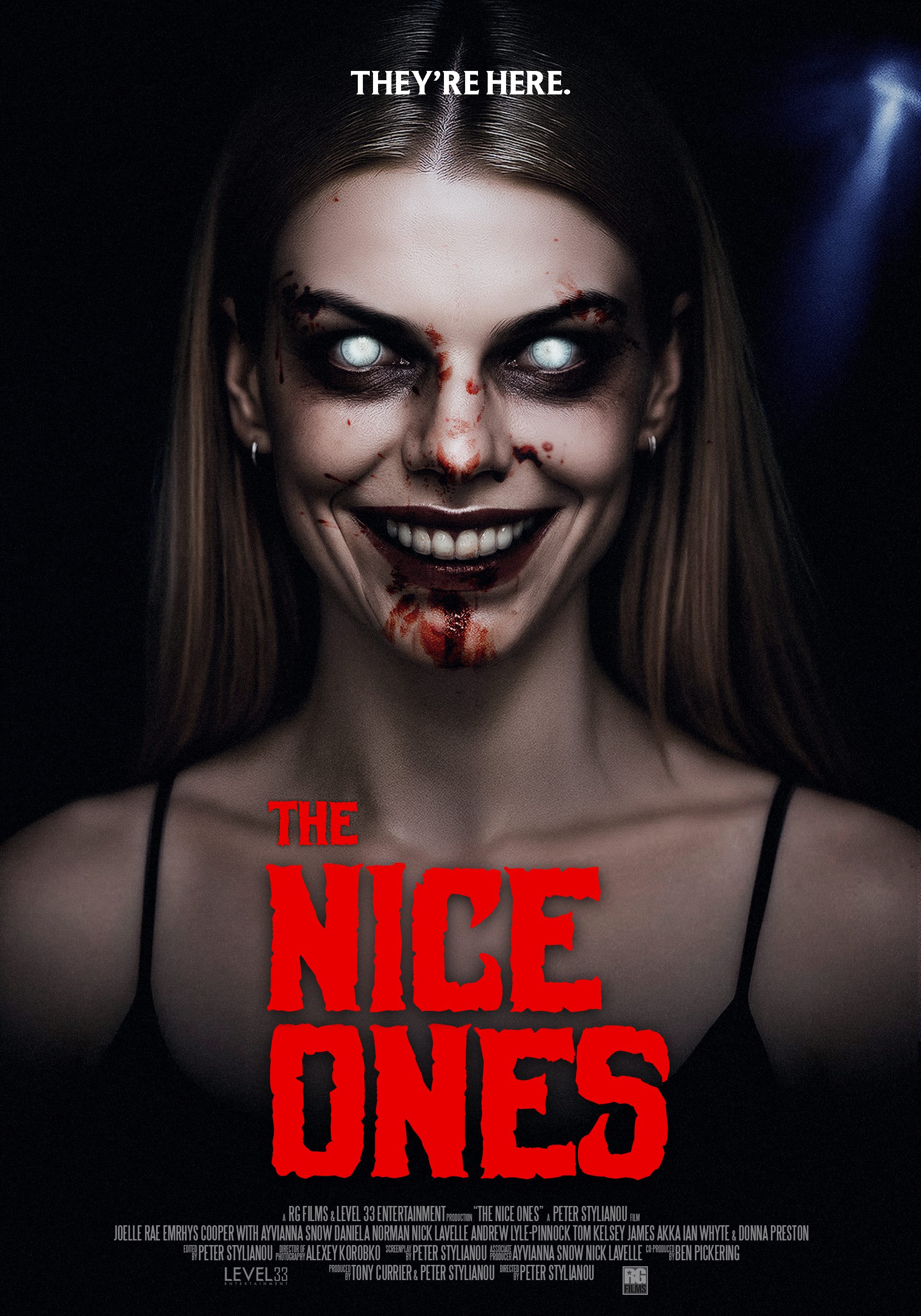
“The Nice Ones” follows Kate, who grows increasingly convinced that something has happened to her boyfriend and his friends after strange lights begin appearing in the sky during their remote countryside retreat.

Even though “The Nice Ones” has a slim 89-minute runtime, writer-director Peter Stylianou takes a slow-paced approach to the narrative. The early stages of the film are made up of driving, character introductions and… lots of darkness. Of course, this is to familiarize viewers with the onscreen individuals. Stylianou does have an excuse for the extensive welcome, as it’s a reunion for the characters as well. Nonetheless, it feels like too much time is spent on environment shots and filler transitional scenes for a movie that is so short.
It doesn’t take long for the development to start paying off, however. By establishing distrust between Kate and the rest of the group, Stylianou makes the character-driven aspects of the story equally compelling as the mysterious center. This allows tension to come from multiple directions rather than just one.
“The Nice Ones” contains a mixture of psychological thriller, supernatural horror and sci-fi elements. Because the screenplay doesn’t get bogged down by logistics, these separate aspects are able to transform into a cohesive unit. Within these different subgenres, it explores the idea of perfection; a world without sorrow or darkness. The film offers some dark humor through this topic, as characters question why specific individuals are acting so nicely. Stylianou includes these brief exchanges to exemplify just how sad or angry or distant humans may ordinarily act.
“It’s my darkness. I earned it.”
By the time the film comes to an end, it almost feels like it’s only just beginning. This will likely leave viewers yearning for more, while also making it seem like just a small chapter of a story, which is both intriguing and frustrating at the same time.
Director of photography Alexey Korobko uses the darkness to his advantage. Thematically speaking, the choice provides clear contrast to the “light” that terrorizes the characters. Many scenes take place in near-pitch-blackness, drawing the eye toward faint glows or obscured objects in the frame. The visual effects are hit-or-miss, remaining effective enough without growing overly distracting. Stylianou isn’t afraid to showcase them in full force, whether that’s lights in the sky or bloodshed.
Audio is another piece that keeps “The Nice Ones” flowing. Andy Fosberry’s score is full of subtle compositions that build pressure before erupting with strings and sharp sounds. They also shift into whispers and humming noises that blend together. The music choices bring additional comedy to the film — one instance in particular, featuring “life is good” lyrics paired with opposite imagery, stands out.

Joelle Rae (Kate) portrays an anxious yet insightful individual. She remains awkward and quiet for large stretches of the runtime while also speaking up in key moments. With previous traumas and a dismissive boyfriend played by Emrhys Cooper (Dale), Kate is the perfect “final girl” candidate. Rae succeeds in that role, upping the intensity in her performance as the end grows nearer. Ayvianna Snow (Shelly) gives a sweet and sinister performance. At times, she’s over-the-top obnoxious and loud. At others, she speaks slowly and methodically, with a high-pitched raspiness to her voice. Nick Lavelle (Jay) gives a chaotic portrayal from the start that gradually grows full of maniacal laughs and shouting. Also appearing are Daniela Norman (Jade), Andrew Lyle-Pinnock (Danny), Tom Kelsey (Tom), James Akka (Ben), Ian Whyte (Hunter) and Donna Preston (Martha).
“The Nice Ones” balances light and darkness through a mixture of the supernatural and the otherworldly. It maintains a small-scale status while hinting at bigger — and more interesting — implications to come.
Rating: 2.5 out of 5
