
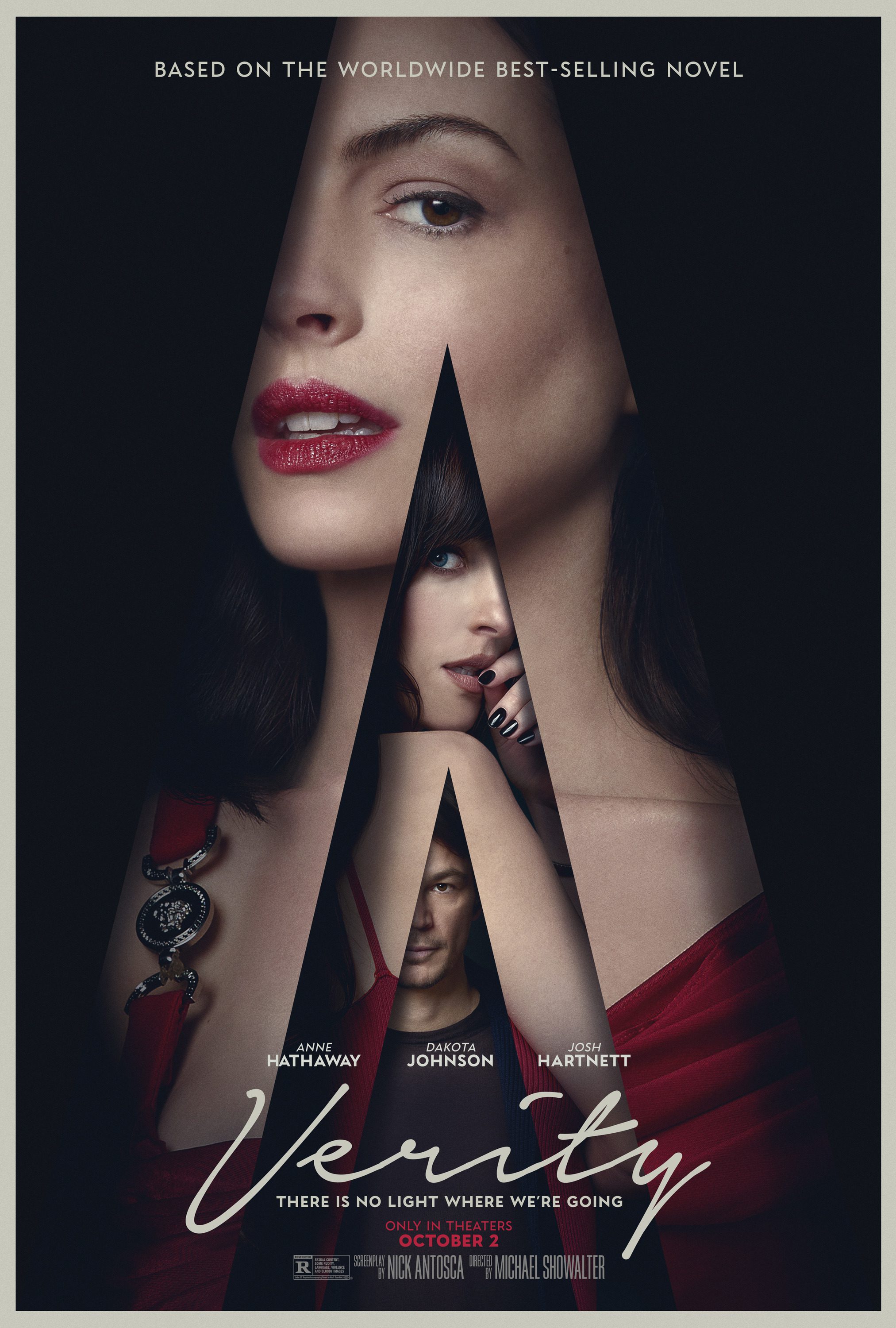
“Verity” follows Lowen, a struggling author who relocates to the remote Crawford estate to ghostwrite for Verity. There, she struggles to separate fact from fiction while navigating Verity’s autobiographical notes and the confessions about her husband Jeremy. It’s based on Colleen Hoover’s novel of the same name.

“Don’t worry, it’ll be the best one yet.”
Many people have a love-hate relationship with specific genres, actors, directors, etc. That’s how I feel about Hoover adaptations. Well, for me, it’s more of a hate-tolerate-dislike relationship — my feelings toward “Regretting You,” “Reminders of Him” and now “Verity.”
Centered on an author, Nick Antosca’s screenplay isn’t able to escape the pages. Similar to another 2026 release, “In the Grey,” this feels like all exposition and no actual story. Two-thirds of the 114 minutes is spent in the past, cutting between literal words on pages and flashbacks. Even as interesting present-day developments occur, director Michael Showalter constantly reverts to recollections that halt the momentum. This is present throughout the entire movie, making the first half tiresome and the second half feel like wasted potential.
Despite the uninteresting narrative approach, “Verity” remains intriguing. The audience is put in Lowen’s shoes, practically serving as a viewer of the twisted tale of Verity and Jeremy. As she reads pages of a book or manuscript, viewers experience them along with her. As new information is uncovered, viewers are expected to have the same reaction as she does. Unfortunately, most of the shock value comes through narration rather than legitimate storytelling. This makes the film almost feel like an audiobook version of Hoover’s story at times rather than an actual movie.
And it’s a shame, because there is a talented trio of actors at the center: Dakota Johnson (Lowen), Josh Hartnett (Jeremy) and Anne Hathaway (Verity). It’s the usual role for Johnson, speaking slowly and seductively, similar to other recent parts in “Splitsville” and “Materialists.” Hartnett never shows too much emotion, so it’s hard to fully trust his character. He succeeds in keeping many aspects of Jeremy in the dark through his held-back delivery. Hathaway easily delivers the best performance, but there’s a problem — she’s hardly in it. Mostly relegated to narration and brief spurts of silence, she isn’t given enough material to work with. This is all part of playing Verity, but even when the perfect opportunity to let the character shine arises, Showalter brakes rather than stepping on the gas.

This leads to another major issue: the movie never ends. Even after major twists and grand reveals, “Verity” keeps on going. This involves more of the exposition that plagues the rest of the runtime. Rather than concluding on a staggering note, it simply dwindles away until the credits roll.
Still, there is entertainment value within. When moving away from dialogue, Showalter brings a blend of darkly comedic, erotic and thrilling scenarios to the screen. It’s a surprisingly quiet movie, letting conversations and hush fill the air. When Volker Bertelmann’s compositions kick into gear, they hit all the harder. These brief moments offer some hope in a clouded experience, finding its footing when not trying to “out-clever” the audience.
“Verity” is all bark and no bite. The film zigzags its way through surprising twists and turns, only to waste them on endless clarification.
Rating: 2 out of 5
