
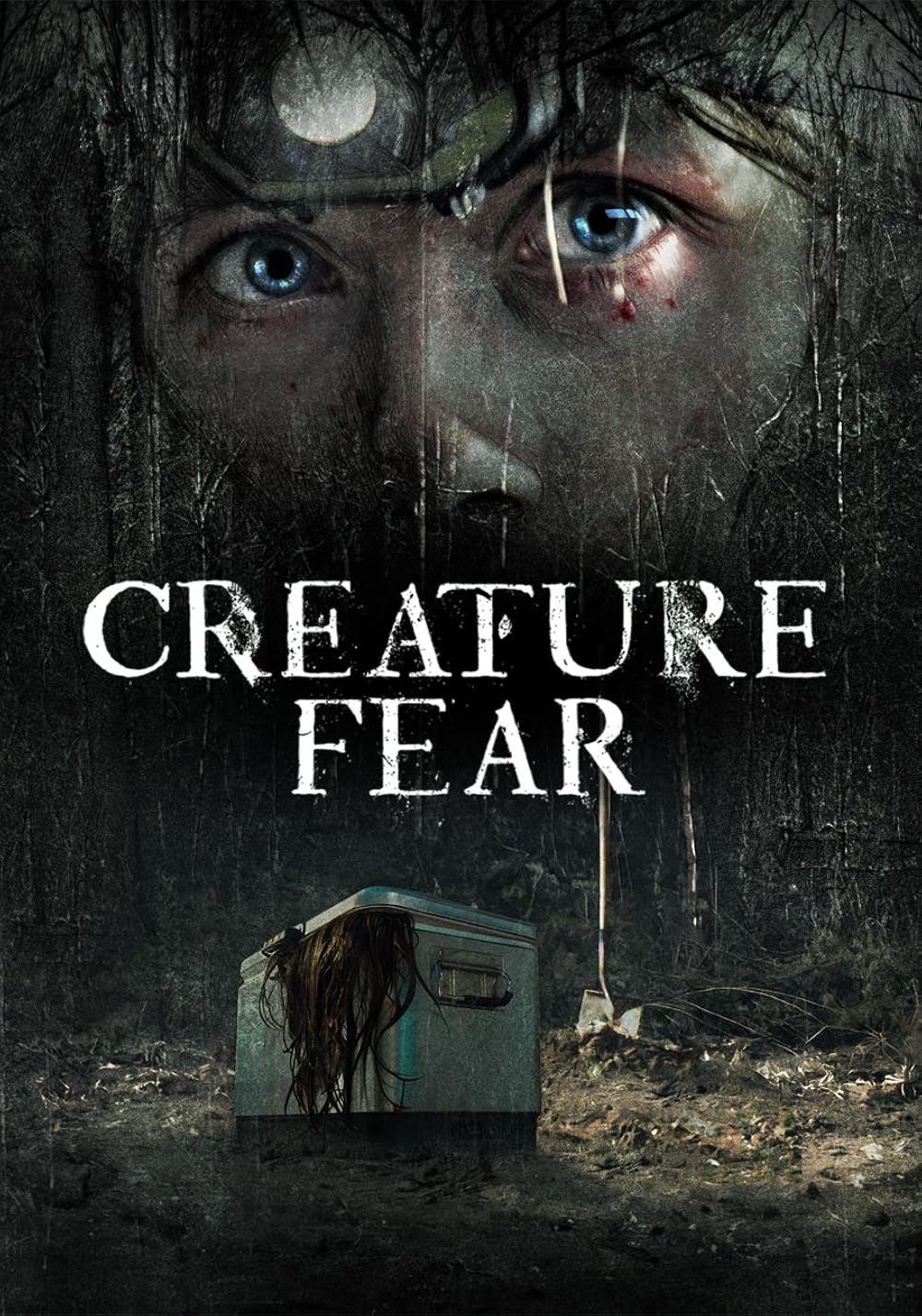
“Creature Fear” follows a poverty-stricken felon who becomes infected after ingesting diseased venison, targeting a Chicago musician and a mysterious singer during his descent into madness.
Rather than strictly sticking to horror, “Creature Fear” adds in dramatics. Writer-director Manny Gumina does this through the characters. Paul Pilcrow is a starving alcoholic. Charlie Barons is an artist looking for change. Miriam Fadin has a tragic past that she keeps buried inside. Gumina continues to develop the characters alongside the increasingly horrific scenarios, allowing investment in both aspects to grow. In the process, it becomes less of a story about “chronic wasting disease” and more about a darkly complex trio of characters.
Jarrod Langwinski (Paul Pilcrow) has a rambling, careless delivery that works well in both ordinary and unusual circumstances. His soft-spoken performance almost makes you feel sorry for the character at times despite his unredeemable actions. Langwinski doesn’t always remain quiet, though, eventually upping the ante for a more rageful presence. There are many sides to Natalie Gerene’s (Miriam Fadin) character. She doesn’t always say everything she’s feeling, but her words carry emotional weight. Billy Chengary (Charlie Barons) brings a caring and upbeat personality to the screen. He’s your “ordinary guy,” with just a bit of shortsightedness.
Gumina stuffs all of this inside an 81-minute runtime. Because of the shortened length, certain aspects of the plot feel underdeveloped — particularly the “infection.” While there is ambiguity regarding whether Paul is psycho or sick, the buildup to his crazed status is far from gradual. This leaves “Creature Fear” feeling void of the big “transformation” that so many other genre classics contain. Regardless, it may be the most lifelike approach. In the real world, you don’t always get easy-to-see precursors to tragedy.
The ending of the film packs a punch of surprise. While the trajectory is one of many possibilities that are easy to see coming, the concluding ambiguity will likely leave viewers pondering “Creature Fear” long after the credits roll.
Gumina and director of photography Derek Schmitt get creative with the camerawork. Most of the time, shots are kept static to convey a sense of normalcy. Others feature more chaotic techniques, with mounted shots, hyper-fast zoom-ins and more. During moments of gore, Schmitt executes extreme close-ups that give the bloody flesh and carcasses that “gross” factor. While the budget is low, the blood splatters and dismembered animal (or human) body parts look real enough.
The rural Wisconsin environment is also well-utilized, both visually and narratively. While many scenes take place indoors, the wooded backdrop adds depth to the outdoor sequences. The isolation of this setting is a key part of the story, clearly serving a role in the title itself: “Creature Fear.” As humans are pushed to their limits with hunger, financial struggles or emotional traumas, desperate tendencies begin to come out.
A creature isn’t actually the source of fear in “Creature Fear” — it’s humans. On top of the animalistic, diseased decline, the film pushes several characters to their threshold before the nice facade begins to fade away.
Rating: 3 out of 5
