
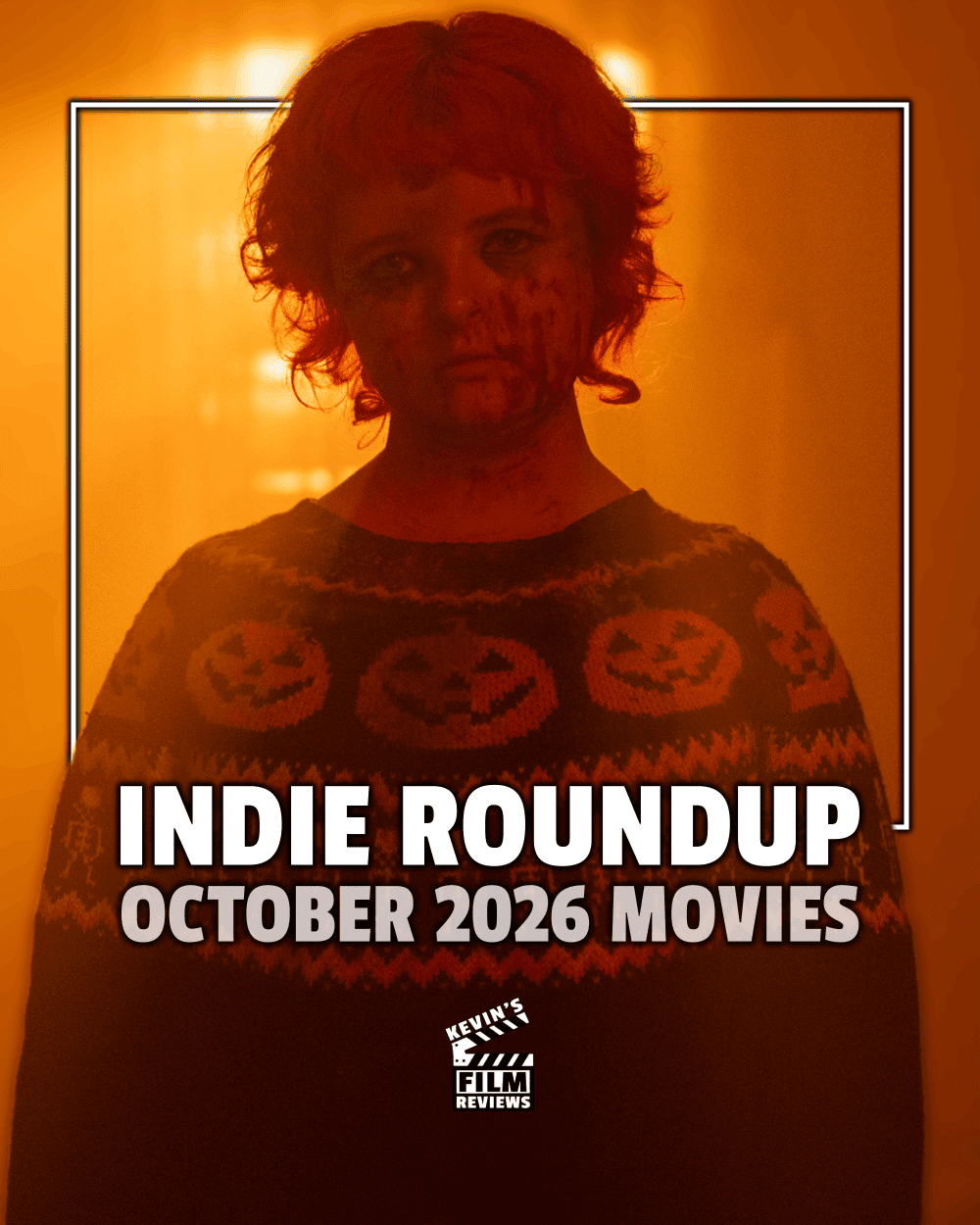
Welcome back to the monthly indie movie roundup. Naturally, October featured plenty of horror, but also plenty of dark comedy and soul-searching along with it. If you want to dive deeper, simply click on the film title to read the full review.
Here are 10 independent productions I watched in October 2026, listed in viewing order:
‘Ghost in the Cell’
‘Ghost in the Cell’ has a little bit of everything, going from extreme displays of gore to choreographed dance numbers. The lack of a single tone makes director Joko Anwar’s film memorable, but also makes it a less-than-cohesive experience at times. Nonetheless, it’s able to pack a horror exterior with comedic side quests, action set pieces and cultural criticism on the inside.
‘The Cuckoo Clock’

An easy word to describe “The Cuckoo Clock” is bizarre. In a good way. Writer-director Lisa Jay takes a slow-burn approach to meticulously make the character dynamics clearer before delivering payoff in the second half of the 91-minute runtime. The scenes may seem disconnected at times, but they mesh together to create supernatural horror that’s hard to look away from. Who would’ve thought that a talking cuckoo clock could be so scary?
‘Creature Fear’
“Creature Fear” is all about the characters. Writer-director Manny Gumina places them in increasingly horrific scenarios to pack a punch of surprise. The performances of Jarrod Langwinski (Paul Pilcrow), Natalie Gerene (Miriam Fadin) and Billy Chengary (Charlie Barons) are a big reason it works. It’s not a creature at the center — the film shows what happens when humans are pushed to their limits.
‘His Monster’
A Shojo Monster is a metaphor for addiction in “His Monster.” Writer-director Erich Cannon explores forgiveness and accountability through nonchronological storytelling. Although the symbolism doesn’t fully come together, the creature takes center stage in the final act. The maniacal monster with orange fur and glowing red eyes is the perfect addition to a moving story of recovery.
‘I Hate Myself and Want to Die’

This is one of the most in-your-face titles of 2026. “I Hate Myself and Want to Die” explores themes of depression and suicide, contrasting them with comedy to create the perfect catharsis. The actors add authenticity to writer-director J. Davis’ screenplay, particularly Mike Castle (Jacob) in the lead role. The film advocates for mental health by broaching a dark subject in a lighthearted way.
‘Hallowarrior’
Horror fans will easily recognize the lead actor of “Hallowarrior.” It’s Milly Shapiro (Pumpkin) from “Hereditary.” Her character is extra giddy about Halloween in a movie that is effectively a love letter to the holiday. The central character survives on a candy diet. Kills are carried out using pumpkin carving tools. Villains are dressed in classic masks. It turns a campy atmosphere into a bloody battleground with a heartfelt center.
‘Blow the Horn’

Writer-director Nacho Arenas crafts an uncomfortable environment where characters are forced to air out their “dirty laundry.” Everything seems simple on the surface, but “Blow the Horn” is hiding a major trick up its sleeve. The entire film is made up of dialogue, as a group therapy session devolves into small disagreements and full-blown arguments. The final act recontextualizes everything that came before, encouraging discourse about its deconstruction of love.
‘The Cycle’
After watching “Blow the Horn,” I felt that it had the most shocking plot twist of 2026. Then “The Cycle” came along. Jordan Downey practically puts two different movies into one; think of the first half as “Zodiac” and the second half as “The Thing.” Unpleasant imagery of rotting bodies and skeletons gradually gives way to torn-off limbs and blood-squirting bite wounds. It transforms — literally — from level-headed thriller to outlandish horror, delivering 112 minutes of pure madness.
‘Seniors’
At the center of “Seniors” are a troublemaker kid (Ori) and an angry old man (Albert). It’s a coming-of-age story for Ori as he forms a bond with Albert, while also dealing with fractured relationships, crushes and more. While the character shells are stereotypical, director Lance Clark adds layers of complexity that are revealed throughout the 103-minute runtime. John Rhys-Davies (Albert Vernon) delivers snarky yells alongside surprisingly nuanced monologues. It shows that connection can come from anywhere, and that forgiveness can be turned into fun.
‘Dissociated Me’
“Dissociated Me” blurs the line between fact and fiction through its hybrid docudramedy approach. It follows Janaé Rachel Ballot as she attempts to make a movie about her life. Well… it’s not as easy as she initially thought. There’s authenticity here, but also heightened performances from Ballot and those around her. In the process, she explores themes of grief, trauma and self-identity while offering realistic depictions of mental health struggles.
