
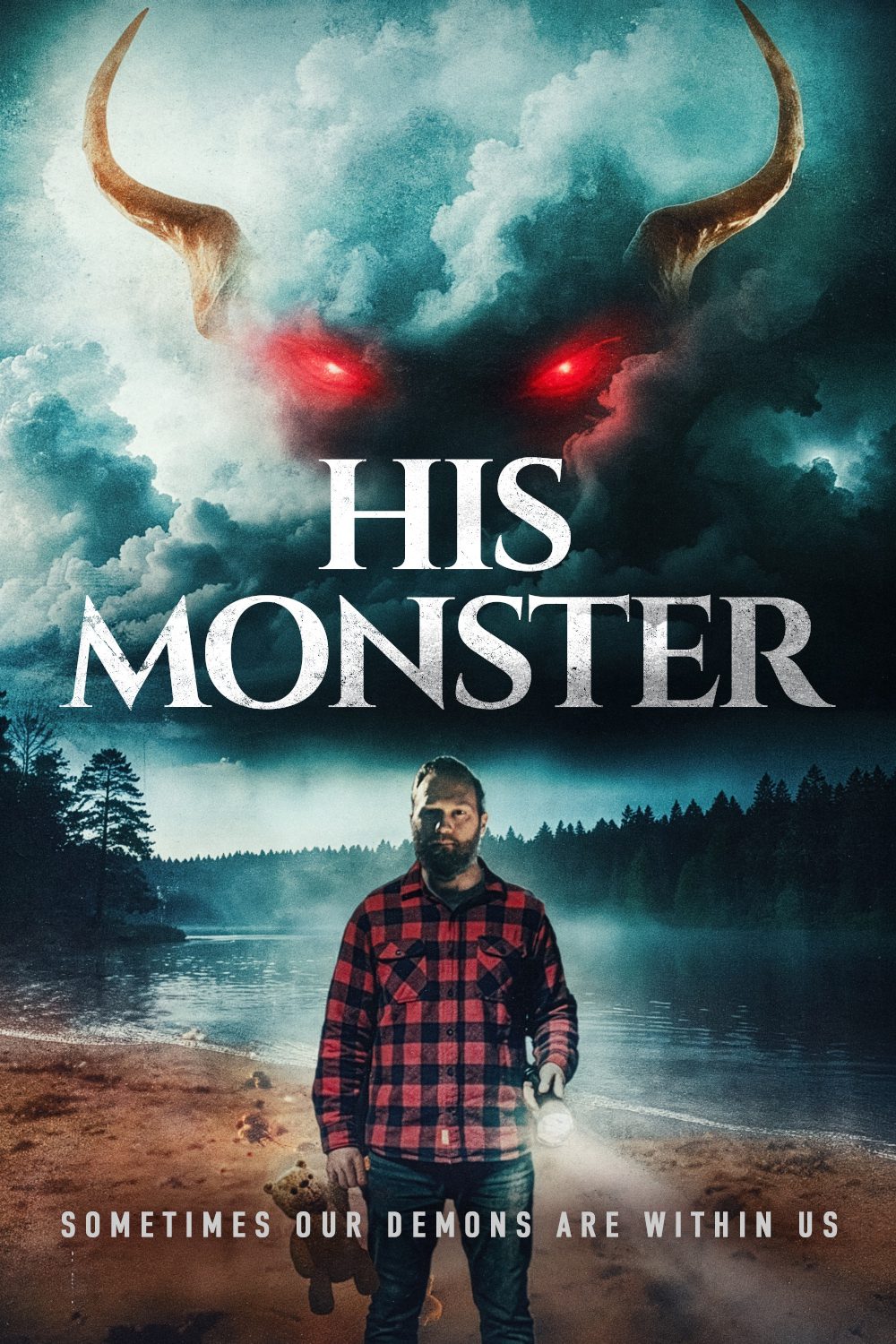
“His Monster” follows James, a struggling alcoholic whose daughter is mysteriously swept out to sea, causing him to search the woods for what he believes is responsible.

Writer-director Erich Cannon centers the story on addiction through a journey of forgiveness and accountability. The Shojo Monster brings a horror edge to the film, but is mainly present as a metaphor for the traumas that plague James’ life. This is done through a mixture of present-day events and flashbacks. As James goes through new experiences that make him contemplate reopening the bottle, he remembers the mistakes of his past. This approach perfectly epitomizes the nature of addiction — one bad day or a stressful situation can make it all come crashing down. The topic of grief coincides with this dependence, with the pain of losing a loved one becoming woven into the fabric of James’ identity.
“Make your past, present and future whatever you want it to be.”
While the messaging is impactful, the symbolism doesn’t completely come together. Because the Shojo Monster is so underutilized, its appearances create a tonal imbalance. The film functions strictly as a drama for long stretches of the 87-minute runtime, only pausing for brief moments of horror that sometimes feel out of place. In this way, it’s similar to other 2026 entries like “The Leaching” and “Dark Hollow.” Here, however, it doesn’t have complete cohesion with the rest of the narrative.
Despite only appearing briefly, the Shojo Monster makes its presence felt in the final act. Cannon shows restraint in revealing the monster in its entirety, with close-ups and darkness obscuring some of its detailed features. Still, the glowing red eyes and bright orange fur make it visually prominent, while the high-pitched shrieks and laughs make it menacing to hear. The look is executed through a mixture of practical and digital effects — including a physical suit and CGI smoke-like imagery. William Cannon’s score also has a gradual buildup, maintaining a soft style until growing louder as the conclusion nears. This includes chant-like vocals that serve as an intensified backdrop to the James-versus-Shojo showdown.
Director of photography Neil Larson makes the most of the location, with environmental shots highlighting mountainous terrain, crashing waves and more. This includes not only standard wide-angle static shots, but also drone footage. When the stakes are raised, movement is added to the camerawork to convey James’ heightened state.

Gabriel Casdorph (James) delivers spurts of emotion, but has a one-note performance throughout much of the movie. His lack of overreaching feelings is authentic for who James is — a person who keeps his issues bottled up inside rather than letting them out. Meranda Long (Mira) is the most charismatic member of the cast, with an instantly likable personality that contrasts well with Casdorph’s plainness. Also appearing are Ashley Song (Su-Yeong), Miette Blanche (Hanna), Brace Evans (Detective Joseph) and Justin Harris (Tim).
“His Monster” doesn’t flawlessly merge its horror and drama throughlines, but that doesn’t take away from its intent. There’s a moving story about recovery within this Shojo Monster tale.
Rating: 3 out of 5
