
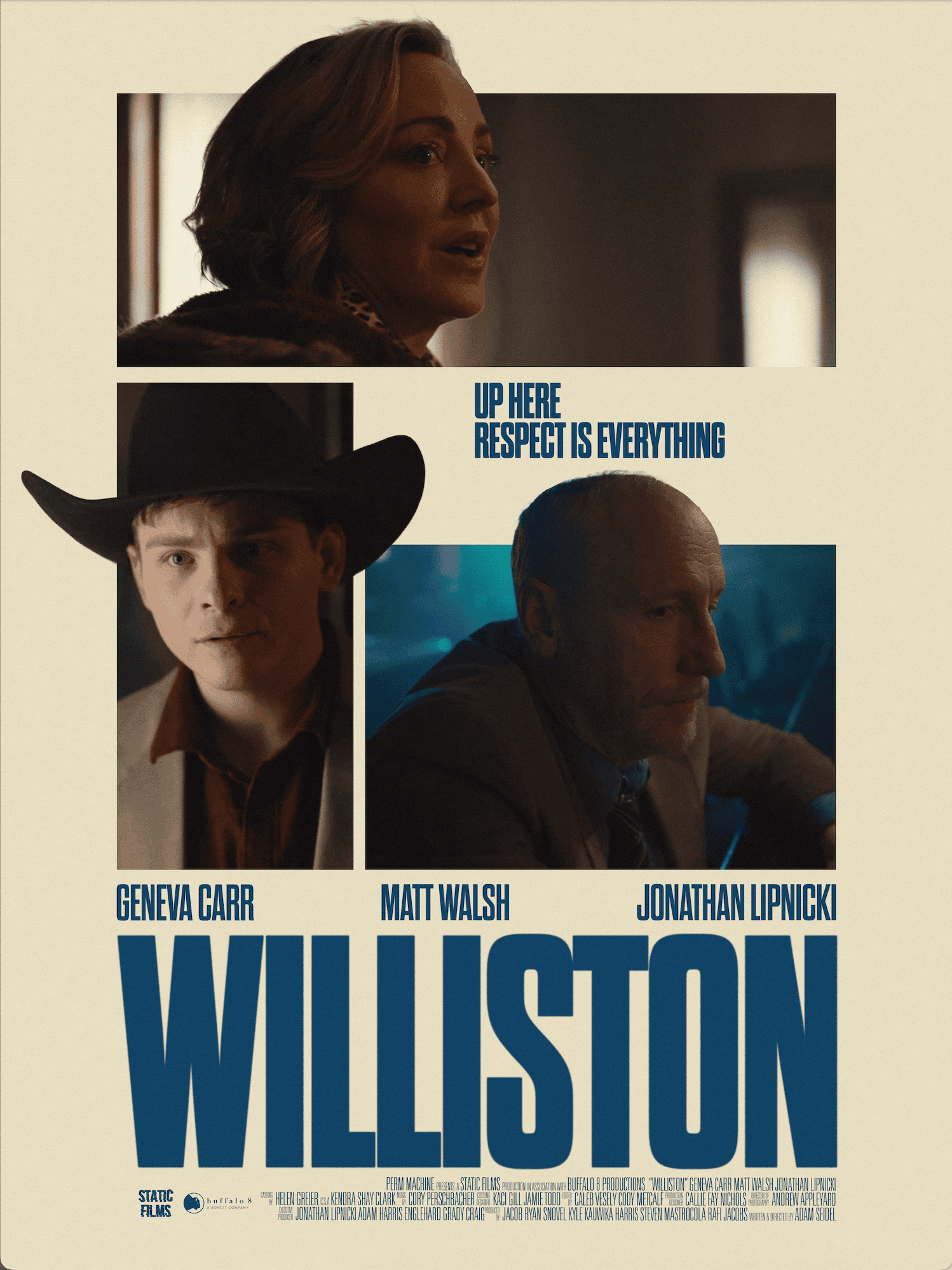
“Williston” follows experienced landmen who travel to North Dakota to secure mineral rights to undeveloped land that is owned by a man who hates the oil industry.

Despite having just an 83-minute runtime, “Williston” doesn’t have much urgency in its early stages. Many might assume that this is a bad thing, but it’s actually not. The first third is spent on worldbuilding — introducing viewers to both the trio of main characters and Williston, N.D., as a whole. Tom is “the numbers guy.” Barb is blunt. Larry is cranky. The rural town has its own persona: desolate and cantankerous. Aside from Tom, writer-director Adam Seidel makes almost every character short-tempered and hot-headed, leading to a number of awkward and humorous exchanges.
The actors play a major role in giving each character a distinct personality. Jonathan Lipnicki (Tom) is the younger member of the main cast, and his constant smiles and upbeat lines perfectly convey his character’s naivety. His role is easily comparable to Jesse Plemons’ in “Digger,” with the restraints on his performance loosening as the conclusion grows near. Matt Walsh’s (Larry) character is almost always agitated about something, delivering brash and straight-up rude lines with ease. Lipnicki is able to showcase his range when matching Walsh in back-and-forth arguments. Geneva Carr (Barb) has the most memorable performance of the group, providing a well-rounded mixture of snarkiness and sentimentality. Her sharp delivery and assertive attitude give Barb a strong presence.
Lipnicki, Walsh and Carr carry the weight of making “Williston” succeed. If the audience can’t buy into the characters, the film fails. Luckily, all three of them are captivating. It’s adapted from Seidel’s original play of the same name, and you can feel its theatricality. There are hidden agendas. There are shouting matches. There are deals struck. Even though the dialogue-driven approach may turn it into an endurance test for viewers looking for something more fast-paced, it’s a method that suits the movie well.

“Williston” is similar to other 2026 entries like “Primetime” and “Bloodstained Ivory.” Those may seem like strange comparisons on the surface, but they share a similar theme: the cost of doing whatever it takes. The film weaves through ethical dilemmas while examining respect, deception and legacy.
Production designer Callie Nichols, director of photography Andrew Appleyard and composer Cory Perschbacher add to the town’s aura. Much of the film is spent with these characters speaking inside a dull motel room. Nichols doesn’t try to glamorize the space, instead soaking in all of its plainness. Appleyard then contrasts this with stunning outdoor shots that highlight the beauty of the land the characters so desperately desire. Different effects like ghosting and swirls are also incorporated to distinguish character states. Perschbacher’s score adds the final touch, with compositions that match the setting and coincide with Tom’s initial sentiments: “feels like I stepped back in time or something.”
“Williston” puts its characters in a cage and lets them shine. The film hides most of its true intentions until the end, becoming a beast of dialogue and tension.
Rating: 4 out of 5
